


Think your app is safe because you wrote secure code? Think again.
If you’re asking what is software composition analysis, here’s the short answer:
SCA automatically finds, catalogs, and monitors every open-source and third-party component – direct and transitive – so you know what’s running, which CVEs affect it, and which licenses could bite you.
Integrate SCA into your IDE, CI, and builds to catch issues before they reach production and avoid midnight fire drills like Log4Shell.
Core Overview of Software Composition Analysis for Modern Development
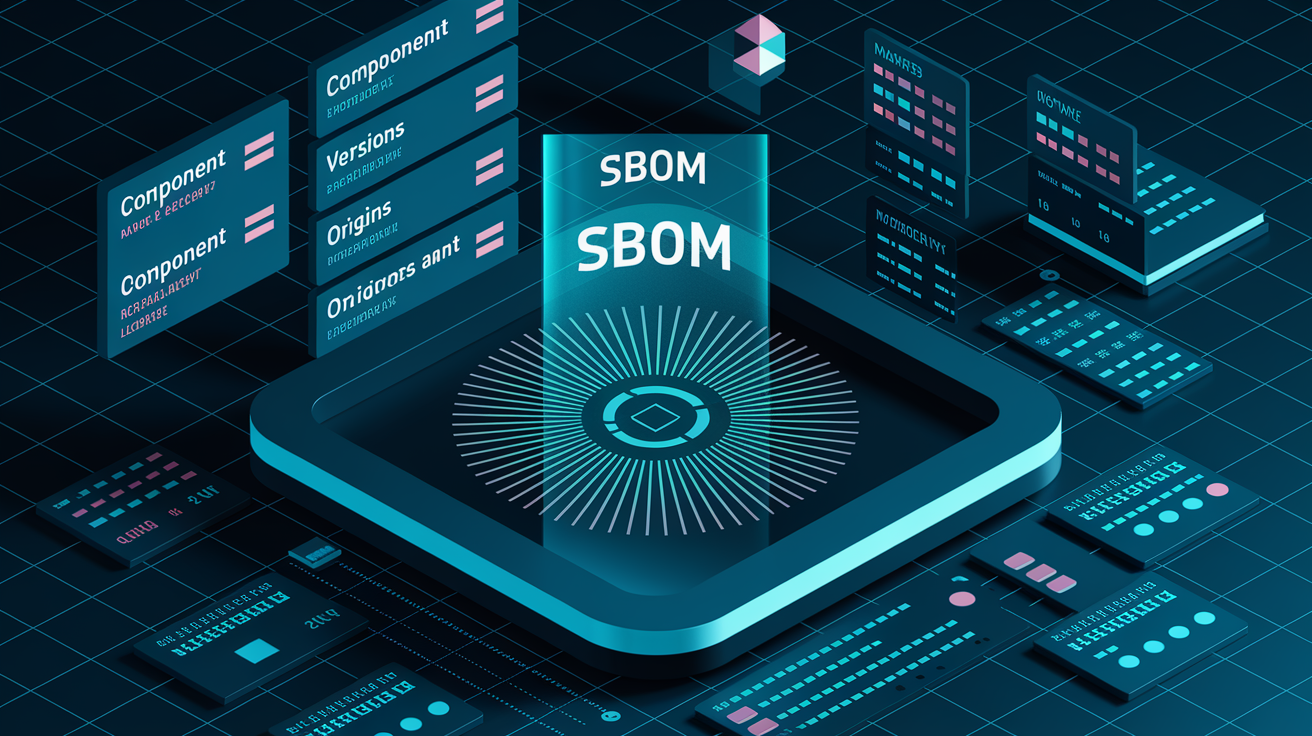
Software Composition Analysis (SCA) automatically identifies, catalogs, and evaluates all open-source and third-party components in your codebase. The goal is simple: build a complete inventory of dependencies, find known security vulnerabilities, and check license compliance. Most modern applications are built on open-source libraries that account for 70 to 90 percent of the total code. Yet many teams can’t tell you what those components are, where they came from, or what risks they’re carrying.
SCA tools scan multiple sources across your application stack to identify components. They parse package manager manifests like package.json, pom.xml, requirements.txt, and go.mod to detect declared dependencies. They also fingerprint binaries and container layers to catch embedded or compiled-in libraries that aren’t listed in manifests. This multi-source approach covers both direct dependencies your team added and transitive dependencies pulled in automatically.
A Software Bill of Materials (SBOM) is one of the main outputs from SCA scans. An SBOM is a structured inventory that lists every component, its version, origin, and license. SCA produces SBOMs automatically during builds and exports them in standard formats like SPDX or CycloneDX for auditing, compliance reporting, and incident response.
Every SCA scan typically delivers these five outputs:
- Complete component inventory with names, versions, and package sources
- Known vulnerabilities mapped to each component via CVE identifiers
- License metadata and compliance flags for each library
- Remediation recommendations like version upgrades or patches
- Continuous monitoring alerts when new vulnerabilities are disclosed in already-deployed components
Dependency Identification and Analysis in SCA Workflows
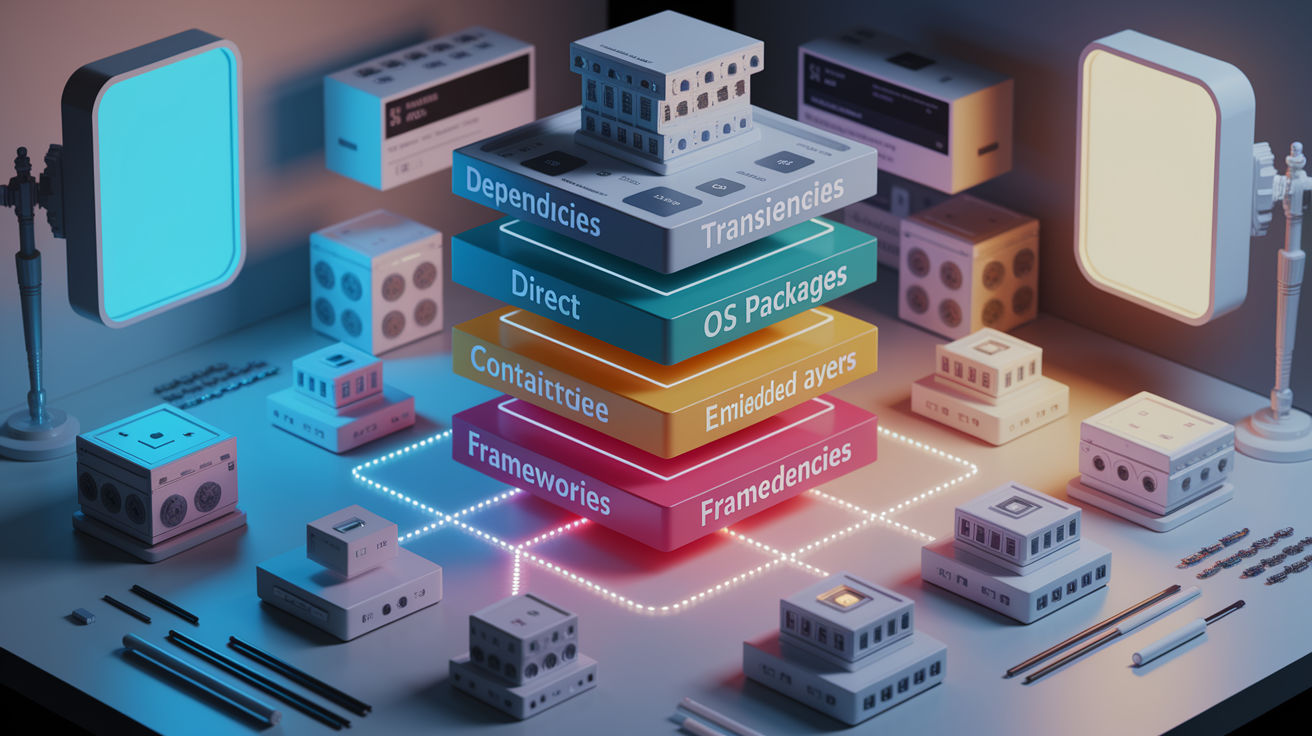
SCA builds a full dependency graph by recursively resolving the tree of libraries your application uses. It starts with the direct dependencies listed in your manifests, then walks each library’s own dependencies to discover transitive or nested libraries. This matters because a single top-level package can pull in dozens of additional libraries. Vulnerabilities often hide several layers deep. SCA continuously monitors these dependency graphs even after deployment, cross-referencing component versions against updated vulnerability feeds and alerting teams when a new CVE affects a library already in production.
Modern SCA tools inspect a wide range of artifact types. They parse source manifests during builds, scan OS package databases inside container images, fingerprint compiled binaries when source isn’t available, and analyze framework-specific ecosystems like npm, Maven, pip, or NuGet. This breadth prevents blind spots that occur when you’re only scanning manifests or only containers.
SCA typically detects and catalogs six key dependency types:
- Direct dependencies declared explicitly in project manifests by the development team.
- Transitive dependencies automatically pulled in by direct dependencies.
- OS-level packages installed inside container base images or virtual machine images.
- Container layers that embed binaries or libraries not listed in application-level manifests.
- Embedded binaries compiled into executables or packaged as bundled JARs, wheels, or gems.
- Framework ecosystem dependencies like plugins, middleware, or runtime extensions loaded at application startup.
Vulnerability Detection Through Software Composition Analysis

SCA maps discovered components to vulnerability databases by matching package names and version ranges against feeds like the National Vulnerability Database (NVD), CVE lists, and vendor-specific databases like the Black Duck KnowledgeBase. When a match is found, the tool associates the component with all relevant CVE identifiers, descriptions, and metadata. Commercial SCA platforms often supplement public feeds with proprietary intelligence that includes zero-day research, proof-of-concept exploits, and detailed remediation guidance.
Severity scoring helps teams prioritize which vulnerabilities to fix first. Most tools use the Common Vulnerability Scoring System (CVSS) to assign a numeric severity score (0.0 to 10.0) based on factors like exploitability and impact. Advanced SCA solutions add reachability analysis, which determines whether the vulnerable code path is actually used by the application. If a vulnerable function is never called, the real-world risk drops significantly. Teams can defer or skip fixes for unused code and focus on actively exploited paths.
Remediation suggestions are generated automatically and integrated with development workflows. SCA tools propose version upgrades, backported patches, or alternative libraries that resolve the vulnerability. Many platforms push these suggestions directly into issue trackers like Jira or version-control systems like GitHub, creating tickets or pull requests with step-by-step upgrade instructions. This tight integration cuts down the manual effort required to triage and fix dependency issues.
License Compliance and Risk Management with SCA

SCA extracts license metadata from component manifests, embedded license files, and package registries to identify what legal terms govern each library. It checks whether your usage aligns with the license type. Permissive licenses like MIT and Apache 2.0 allow broad use. Copyleft licenses like GPL impose distribution and modification restrictions. SCA flags mismatches between your application’s intended use (proprietary vs. open-source release) and the license requirements of its dependencies.
The business risks from license violations extend beyond development. Distributing software that contains GPL-licensed code in a proprietary product can trigger legal action, force retroactive code releases, or block product launches during audits. Missing attribution requirements can expose the organization to copyright claims. SCA automates detection of these risks early, before they reach legal review or customer contracts.
SCA commonly flags four license issues:
- Use of copyleft licenses (GPL, AGPL) in proprietary or closed-source applications
- Missing or incomplete attribution files required by licenses like Apache 2.0
- License incompatibilities when combining libraries with conflicting terms in a single release
- Presence of components with unknown or undeclared licenses that create legal uncertainty
How SBOMs Enhance Software Composition Analysis
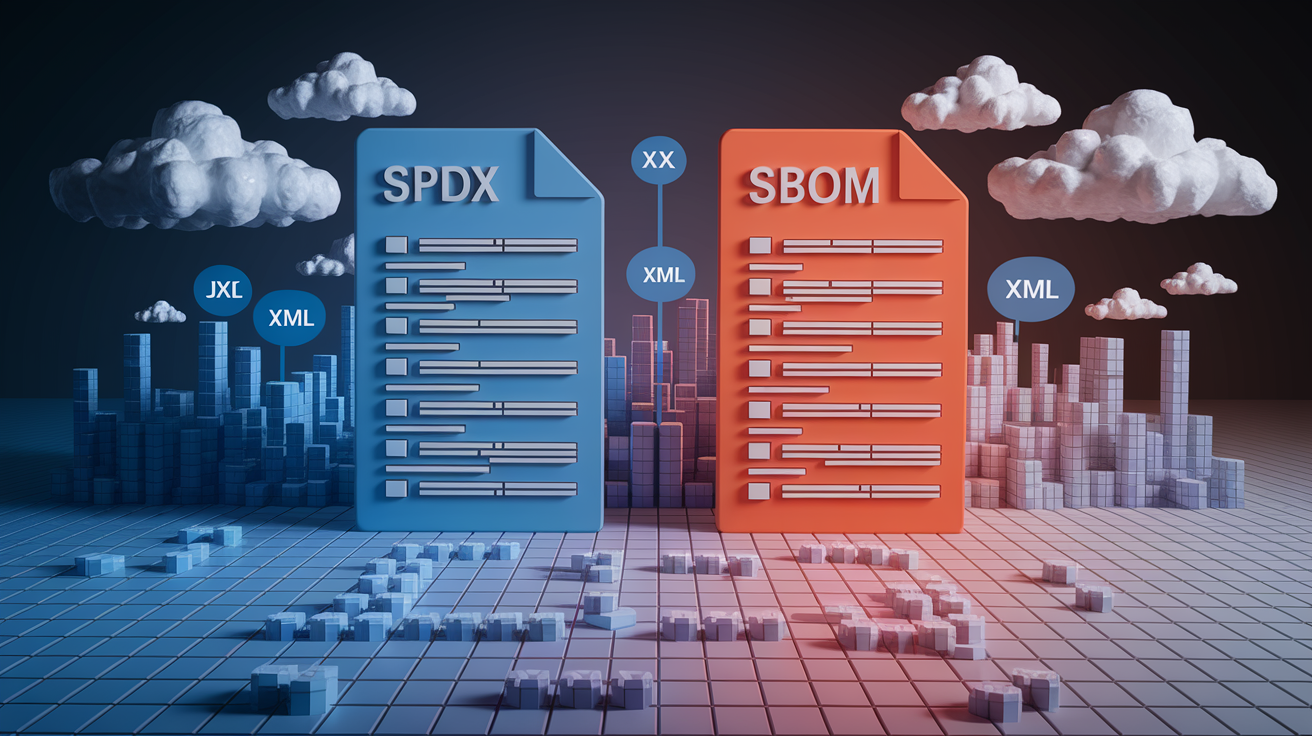
An SBOM documents every component that makes up a software artifact, listing package names, versions, suppliers, and licenses in a machine-readable format. SBOMs support auditing by providing a complete inventory that security teams, auditors, and procurement officers can verify against policy. During incident response, an SBOM lets teams quickly identify whether a newly disclosed vulnerability affects their deployed applications. Critical during events like Log4Shell when response time measured in hours, not days. Regulatory frameworks including the U.S. Executive Order on Cybersecurity now require SBOM production for federal contractors, and procurement teams increasingly request SBOMs as part of vendor risk assessments.
SCA generates SBOMs automatically at build time and exports them in standard formats for interoperability and long-term retention. The two dominant standards are SPDX (Software Package Data Exchange) and CycloneDX, both of which define schemas for component metadata and support JSON, XML, and other serialization formats.
| Standard | Primary Use |
|---|---|
| SPDX | Licensing and compliance reporting; widely adopted in legal and open-source communities |
| CycloneDX | Security and supply-chain risk; designed for vulnerability tracking and DevSecOps workflows |
| Generic JSON/XML | Custom or proprietary formats for internal tooling and legacy integrations |
Integrating SCA into the Software Development Lifecycle
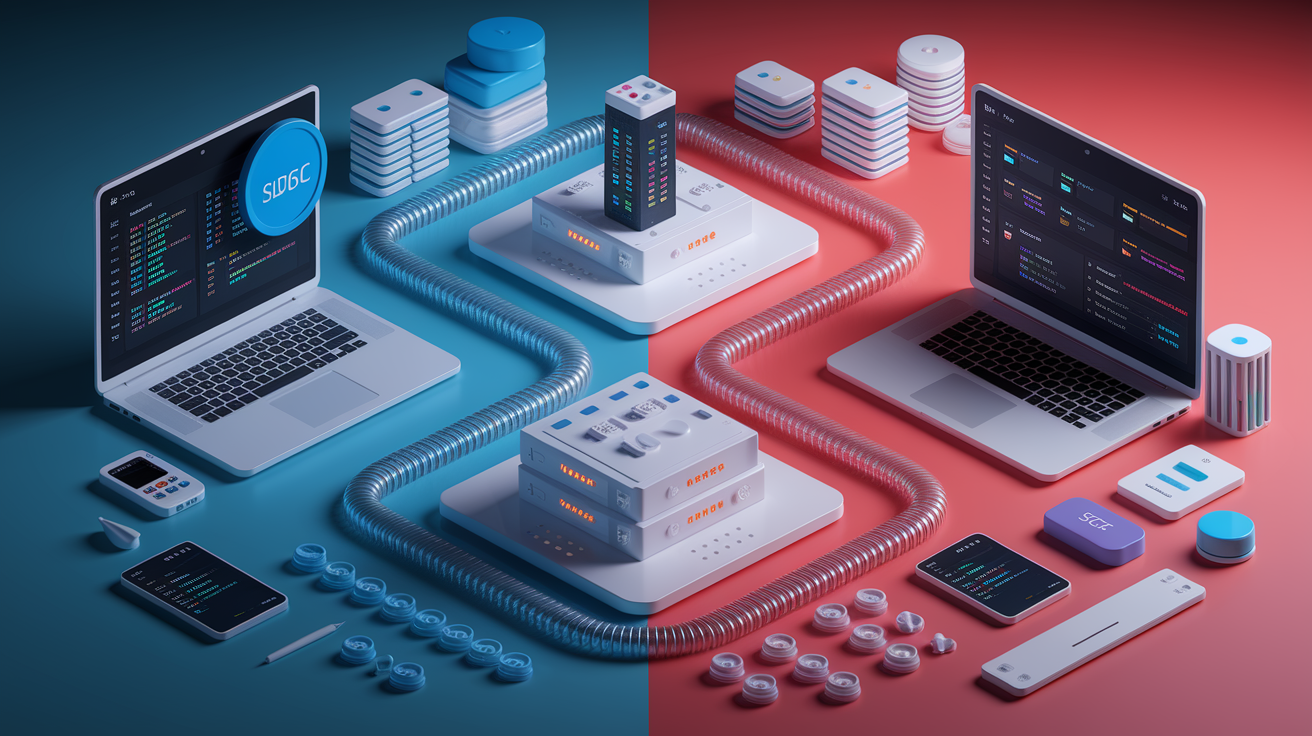
SCA integrates at multiple points across the development lifecycle to shift security checks left and catch issues early. IDE plugins scan local dependencies in real time, surfacing vulnerability warnings and license flags as developers add libraries, long before code is committed. This immediate feedback loop reduces the cost and friction of fixing problems, since the developer is already in context and the change hasn’t propagated downstream.
CI/CD pipelines run SCA scans on every commit or pull request, blocking merges when critical vulnerabilities or banned licenses are detected. Policy engines enforce thresholds like “no critical CVEs” or “no GPL-licensed dependencies in proprietary builds.” Automated PR comments annotate code reviews with scan results, listing affected components and suggested upgrades. Deployment gates extend the same checks to release pipelines, preventing unsafe builds from reaching staging or production environments.
Production monitoring provides continuous coverage after release. SCA tools re-scan deployed artifacts daily or subscribe to vulnerability feeds, alerting teams when a new CVE is published that affects an in-production component. This post-deployment scanning is essential because the majority of CVEs are disclosed after software ships, not during development.
Five best-practice integration points across the SDLC:
- IDE-level scanning for instant developer feedback on new dependencies before commit.
- Pre-commit hooks that reject commits introducing critical vulnerabilities or forbidden licenses.
- CI build scans that run on every pull request and annotate review discussions with findings.
- Release gate policies that block deployment pipelines if severity thresholds are exceeded.
- Runtime monitoring that continuously checks production artifacts against updated vulnerability feeds.
Comparing SCA to SAST and DAST Security Methods

SCA analyzes third-party and open-source components to find vulnerabilities and license risks in dependencies your team didn’t write. It focuses on inventory, CVE mapping, and supply-chain risk rather than custom code quality. SAST (Static Application Security Testing) analyzes your proprietary source code, scanning for coding flaws like SQL injection, cross-site scripting, or insecure deserialization in the code your developers wrote. SAST and SCA are both static techniques that run during development, but they target different parts of the codebase.
DAST (Dynamic Application Security Testing) tests running applications by simulating attacks against deployed endpoints. It finds runtime issues like authentication bypass, misconfigured servers, or injection vulnerabilities that only appear when the app is executing. DAST operates without source code access and discovers problems that static scans miss, like configuration errors or environment-specific bugs.
SCA, SAST, and DAST complement each other to deliver comprehensive coverage. SCA secures the supply chain, SAST secures custom code, and DAST secures runtime behavior. A complete AppSec program layers all three techniques, catching issues across the entire attack surface from dependencies to deployment.
Common Use Cases for Software Composition Analysis

SCA supports regulatory compliance and audit workflows in industries like finance, healthcare, and government, where standards mandate tracking third-party software and producing SBOMs. Procurement teams request SBOMs during vendor risk assessments to evaluate the security posture of purchased or licensed software. M&A due diligence uses SCA to inventory technical debt and license liabilities in acquisition targets, surfacing hidden risks before deals close.
Incident response and CVE-driven patching are critical operational applications of SCA. When a high-severity vulnerability like Log4Shell is disclosed, SCA tools query the SBOM to identify affected components across hundreds or thousands of applications in minutes, prioritizing patching efforts and reducing mean time to remediate. Post-incident, SBOMs provide an auditable record of what was running at the time of the event.
Five practical scenarios where SCA is applied:
- Automating CVE monitoring and patching for deployed applications when new vulnerabilities are published
- Enforcing license policies to block GPL or AGPL components from proprietary product releases
- Generating SBOMs for regulatory submissions, customer contracts, or procurement requirements
- Securing the software supply chain by validating component integrity and detecting malicious packages
- Reducing technical debt by identifying abandoned or unmaintained libraries that pose long-term risk
Popular Tools Used for Software Composition Analysis
Commercial SCA platforms offer broad vulnerability databases, advanced features like reachability analysis, and tight CI/CD integrations. Snyk emphasizes developer experience with fast scans, fix pull requests, and native IDE plugins. Black Duck by Synopsys provides deep license intelligence and comprehensive SBOM generation for enterprises managing large portfolios. Sonatype Nexus IQ focuses on dependency governance and policy enforcement across artifact repositories. Open-source options like OWASP Dependency-Check offer basic CVE scanning without licensing costs, though they lack the advanced prioritization and automation features found in commercial tools.
GitHub Dependabot is built into GitHub repositories and automatically opens pull requests to update vulnerable dependencies, making it a low-friction option for teams already on the platform. Platform-native scanners offered by GitLab, Azure DevOps, and AWS also integrate tightly with their ecosystems, though coverage and accuracy vary.
Tool selection depends on ecosystem support, database quality, integration requirements, and budget. Accuracy of vulnerability matching and the freshness of the CVE feed are critical differentiators, as false negatives leave real risks undetected and false positives create alert fatigue.
| Tool | Type | Key Focus |
|---|---|---|
| Snyk | Commercial | Developer-first UI, automated fix PRs, broad language support |
| Black Duck | Commercial | Enterprise SBOM, deep license analysis, large vulnerability database |
| Sonatype Nexus IQ | Commercial | Policy enforcement, artifact repository integration, governance |
| OWASP Dependency-Check | Open Source | Free CVE scanning, CLI and CI plugins, basic reporting |
| GitHub Dependabot | Platform Native | Automated dependency updates, integrated PR workflow, zero config |
Implementation Challenges and Best-Practice Solutions in SCA
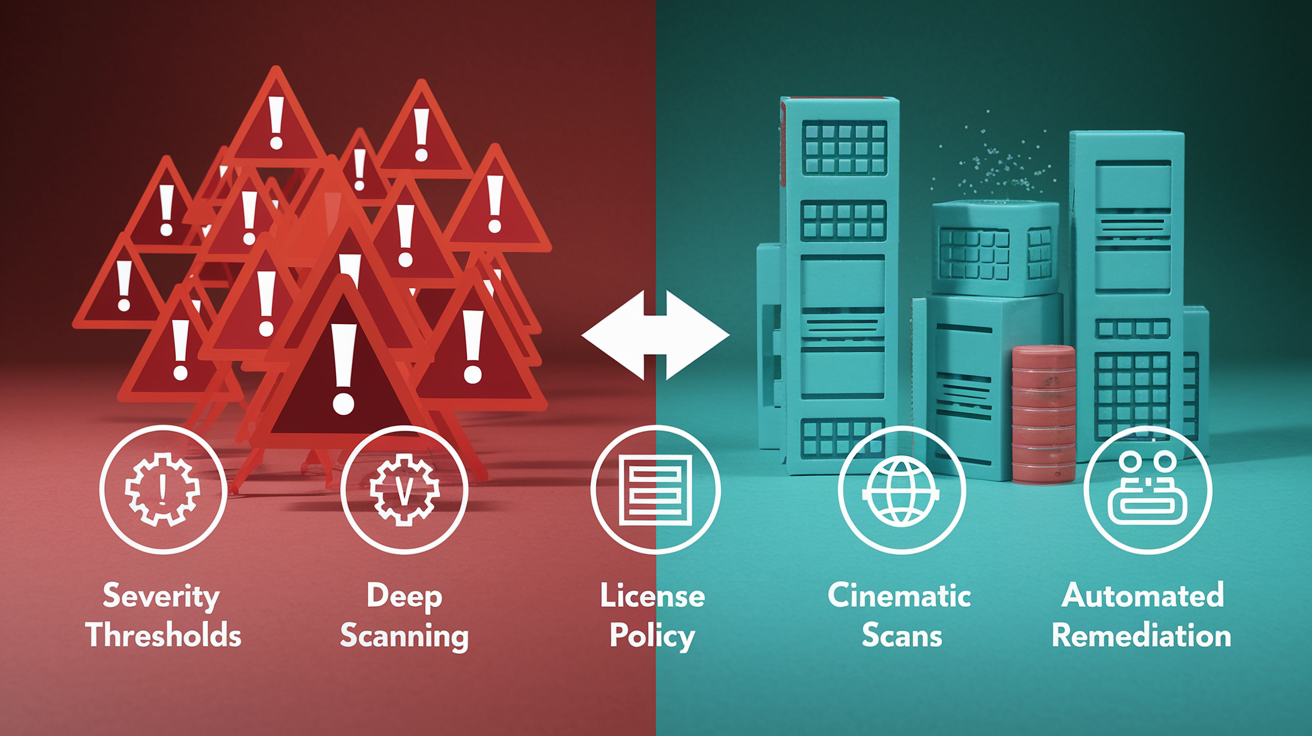
Teams face alert fatigue when SCA tools flag hundreds or thousands of low-severity findings, many of which are false positives or affect unused code paths. False negatives occur when scanning misses obfuscated binaries, private registries, or proprietary package formats, leaving blind spots in the inventory. Incomplete visibility into transitive dependencies is common when tools only parse top-level manifests without resolving the full dependency tree or scanning container layers. License complexity grows as projects combine dozens of libraries, each with different terms, and legal teams struggle to assess compatibility and risk without automated tooling.
CI/CD integration can slow pipelines if scans are synchronous and blocking, creating friction that pushes developers to bypass checks or disable enforcement. Manual remediation workflows don’t scale when each fix requires a developer to research the CVE, test an upgrade, and submit a PR. Teams fall behind as new vulnerabilities are published faster than old ones are patched.
Five common SCA challenges and solutions:
- Alert fatigue from low-priority findings Set severity thresholds and suppress vulnerabilities in unused dependencies using reachability analysis.
- Incomplete dependency visibility Use tools that support deep scanning of binaries, containers, and OS packages, not just manifests.
- License compliance complexity Implement policy-as-code to automatically flag or block incompatible licenses at PR time.
- Slow CI/CD pipelines Run lightweight scans on commits and full scans nightly or weekly; use incremental scanning when available.
- Manual remediation bottlenecks Enable automated fix PRs and integrate with ticketing systems to batch and prioritize work.
Future Trends and Advancements in Software Composition Analysis
The SCA market is forecast to grow from $394.14 million in 2025 to $1.68 billion by 2033, driven by increasing open-source adoption, supply-chain attacks, and regulatory mandates. AI and machine learning are being integrated to improve vulnerability matching accuracy, reduce false positives by learning codebase patterns, and predict exploitability based on historical attack data. These models will automate more of the triage process, letting security teams focus on the highest-risk issues.
Hybrid SCA approaches that combine static scanning with runtime telemetry are gaining traction. Runtime instrumentation observes which libraries are actually loaded and which code paths are executed in production, filtering out vulnerabilities in dead code and prioritizing fixes based on real exposure. SBOM transparency is expanding beyond internal use. Vendors and open-source projects are beginning to publish SBOMs publicly to demonstrate supply-chain hygiene and meet procurement requirements. Regulatory pressure will continue to grow, with more governments and industries adopting SBOM mandates similar to the U.S. federal requirements, pushing SCA from optional to standard practice across all software development.
Final Words
We defined what is software composition analysis: inventorying open‑source and third‑party components, mapping them to CVEs, flagging license issues, and producing SBOMs.
You saw how SCA detects direct and transitive dependencies, prioritizes vulnerabilities with CVSS and reachability, fits into CI/CD, and complements SAST/DAST.
If you still wonder what is software composition analysis, use it to cut supply‑chain risk, speed incident response, and automate license checks. It makes releases safer and smoother.
FAQ
Q: What is the software composition analysis?
A: Software composition analysis (SCA) is a scan that inventories open‑source and third‑party components, maps them to known CVEs, flags license obligations, and can generate an SBOM as an output for audits and fixes.
Q: Why is SCA important?
A: SCA is important because it finds vulnerable open‑source components, exposes license and distribution risks, and reduces surprise incidents by catching issues early and helping teams prioritize fixes before release.
Q: What are examples of SCA tools?
A: Examples of SCA tools include Snyk, Black Duck, Sonatype Nexus IQ, Mend, FOSSA, OWASP Dependency‑Check, and platform options like GitHub Dependabot for dependency scanning and license checks.
Q: How is SCA different from SAST?
A: SCA differs from SAST because SCA analyzes third‑party and open‑source components and licenses, while SAST inspects your proprietary source code for bugs and insecure patterns; both are complementary in a security program.