


Last year alone, cybercriminals exploited over 25,000 documented security flaws to breach organizations of every size. Most of those vulnerabilities sat undetected in networks for weeks or months before someone noticed the damage. Vulnerability assessment tools exist to fix this problem. They scan your infrastructure continuously, flag exploitable weaknesses, and tell you what to patch before attackers find the same holes. This guide covers the best vulnerability assessment tools available right now, what each one actually does well, and how to pick the right scanner for your specific environment and security needs.
Essential Software for Identifying Security Weaknesses

Vulnerability assessment tools scan your IT environments to find security weaknesses, misconfigurations, and vulnerabilities before attackers do. These platforms automatically check systems, applications, and network infrastructure for exploitable flaws that could compromise confidentiality, integrity, or availability. Think of them as automated security inspectors constantly examining your digital estate for unlocked doors and structural problems criminals might exploit.
The tools work by collecting device information through active network communication and comparing system configurations against continuously updated vulnerability databases.
Scanners send requests to target systems, analyze responses about installed software versions and active services, then cross reference this information against known vulnerability catalogs. The Common Vulnerabilities and Exposures (CVE) database serves as the standardized identifier system. Each vulnerability gets a unique CVE identifier like “CVE-2024-1234” for consistent tracking across vendors and platforms. The Common Vulnerability Scoring System (CVSS) provides the industry standard framework for rating vulnerability severity on a 0 to 10 scale with four categories: critical (9.0 to 10.0), high (7.0 to 8.9), medium (4.0 to 6.9), and low (0.1 to 3.9). This scoring helps security teams prioritize which vulnerabilities need immediate attention versus those that can wait for scheduled maintenance windows.
CISA’s Known Exploited Vulnerabilities (KEV) catalog represents a continuously updated database of vulnerabilities actively exploited in the wild by threat actors. These represent immediate danger rather than theoretical risk. Advanced vulnerability assessment tools incorporate threat intelligence feeds and machine learning algorithms to predict exploitation likelihood and identify zero day vulnerabilities beyond static database matching. Rather than simply comparing software versions against lists of known flaws, sophisticated platforms analyze attack patterns, threat actor behavior, and emerging exploit techniques to surface risks before they appear in public vulnerability databases.
Compliance frameworks like SOC 2, ISO 27001, NIST 800-53, and GDPR require regular vulnerability assessments as evidence of due diligence in protecting sensitive data and systems.
Categories of Scanning Solutions by Focus Area
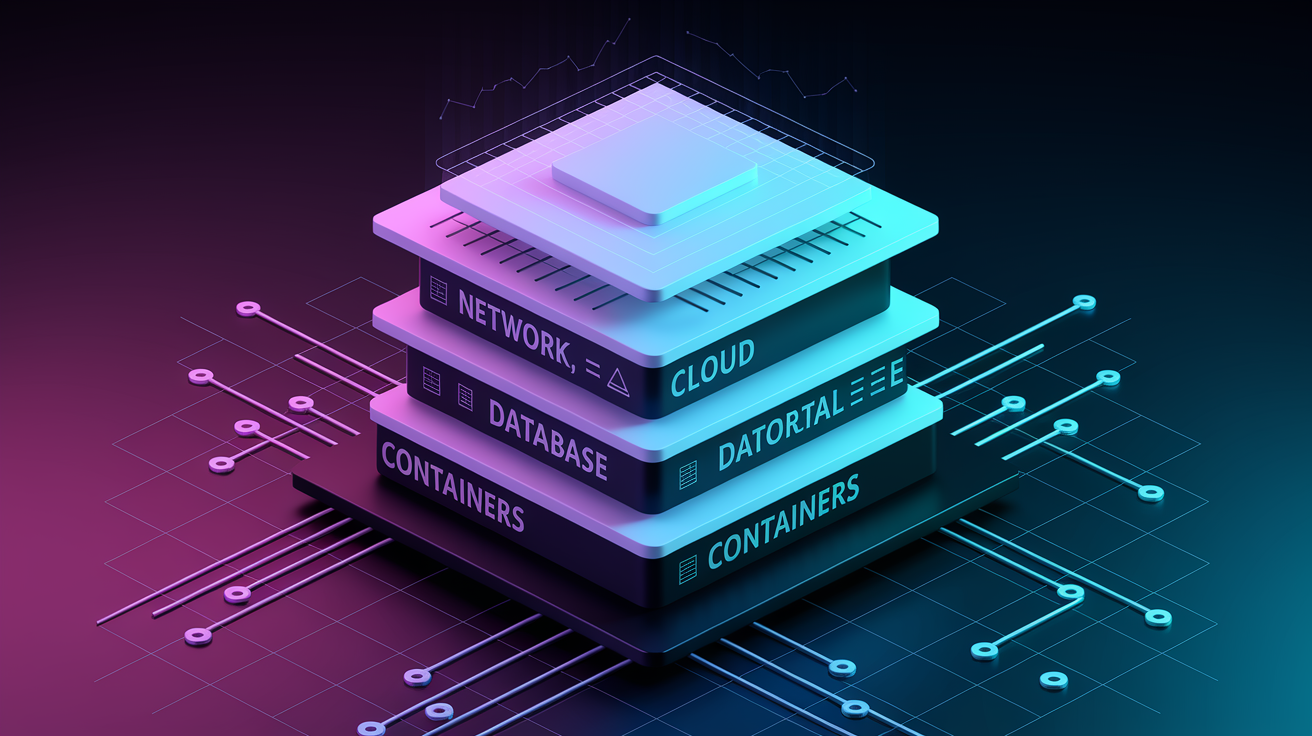
Vulnerability assessment tools are specialized by scanning domain to address specific security challenges across different technology layers. Network infrastructure, applications, databases, cloud platforms, containers, and source code each present unique vulnerability profiles requiring purpose built detection capabilities.
Network Vulnerability Scanners
Network vulnerability scanners examine servers, hosts, network devices, routers, switches, and firewalls to identify outdated firmware versions, weak authentication credentials, misconfigured access controls, and known exploits targeting network protocols. These tools probe open ports, enumerate running services, test default credentials, and check for missing security patches across your entire network infrastructure. A network scanner might discover that your edge router runs firmware from 2019 with 47 known vulnerabilities, or that a server accepts outdated SSL/TLS protocols vulnerable to man in the middle attacks.
Web Application Scanners
Web application scanners perform static and dynamic analysis to identify SQL injection vulnerabilities, cross site scripting (XSS) flaws, broken authentication mechanisms, insecure direct object references, and buffer overflow conditions in web applications and APIs. Static analysis examines source code without executing it. Dynamic analysis tests running applications by sending crafted payloads and monitoring responses. These specialized tools understand web application logic, session management, input validation, and the OWASP Top 10 web application security risks that traditional network scanners miss entirely.
Database Security Scanners
Database security scanners focus specifically on database management systems like MySQL, PostgreSQL, Microsoft SQL Server, and Oracle to detect security weaknesses, excessive permissions, unencrypted sensitive data, SQL injection vulnerabilities in stored procedures, and misconfigurations that expose data to unauthorized access. These tools audit database user privileges, review access controls, identify databases with default credentials, and flag encryption gaps that violate compliance requirements for protected health information or payment card data.
Cloud Infrastructure Scanners
Cloud infrastructure scanners assess cloud environments across AWS, Azure, Google Cloud Platform, and multi cloud deployments to identify misconfigured storage buckets, overly permissive IAM roles, exposed management interfaces, unencrypted data at rest, and violations of cloud security best practices. Cloud native vulnerabilities differ significantly from on premises infrastructure. A publicly accessible S3 bucket or an Azure storage container with weak access controls can expose terabytes of sensitive data with a single misconfiguration that traditional network scanners would never detect.
Container Scanners
Container scanners examine containerized applications, Docker images, Kubernetes clusters, and container registries to identify vulnerabilities in base images, insecure container configurations, exposed secrets, privilege escalation risks, and supply chain vulnerabilities in container dependencies. As organizations adopt container orchestration platforms, these specialized tools become essential for detecting vulnerabilities introduced through third party base images and ensuring containers run with least privilege configurations.
Code Scanners
Code scanners analyze source code and running applications through static application security testing (SAST) and dynamic application security testing (DAST) to identify security flaws during development before deployment to production. SAST tools review code repositories for hardcoded credentials, insecure cryptographic implementations, race conditions, and coding patterns that introduce vulnerabilities. DAST tools test running applications to discover runtime vulnerabilities that only show up when code executes.
Comprehensive security strategies often require multiple scanner types to cover all technology layers in modern environments. A typical enterprise might deploy network scanners for infrastructure, web application scanners for customer facing applications, cloud scanners for AWS resources, and container scanners for microservices architectures.
Critical Capabilities to Evaluate in Assessment Software

Not all vulnerability assessment tools offer the same capabilities. Feature evaluation is critical for tool selection. Seemingly similar products often differ dramatically in detection accuracy, integration options, reporting quality, and operational efficiency.
Effective tools balance thoroughness with accuracy while integrating smoothly into existing security workflows, supporting rather than disrupting security operations teams already managing multiple security platforms and alert streams.
When evaluating vulnerability assessment tools, prioritize these capabilities:
Automated scanning with scheduling capabilities for consistent coverage without manual intervention. Set scans to run weekly for critical assets and monthly for general infrastructure. Low false positive rates with accurate CVE database matching that doesn’t waste security team time chasing phantom vulnerabilities. Integration with SIEM systems, ticketing platforms like Jira and ServiceNow, and patch management tools to create unified security workflows. Comprehensive reporting with visualization features including executive dashboards, technical remediation guidance, and trend analysis for both technical teams and business stakeholders.
Vulnerability prioritization using CVSS scoring combined with business impact analysis that considers asset criticality, data sensitivity, and threat intelligence. Compliance reporting templates for GDPR, HIPAA, PCI DSS, and ISO 27001 standards that generate audit ready documentation. AI and machine learning capabilities for predicting zero day vulnerabilities and identifying anomalous configurations that might indicate security weaknesses. Continuous monitoring versus one time assessment capabilities. Modern threats require continuous visibility rather than quarterly snapshots.
Deployment architecture options matter. Server based (agentless) scanners run from centralized devices with concentrated resource utilization. Agent based scanners distribute workload across devices requiring agent installation on each endpoint. Scalability to maintain performance consistency as infrastructure grows from hundreds to thousands or tens of thousands of endpoints.
Deployment method significantly impacts implementation success and ongoing operational efficiency. Organizations often use hybrid approaches combining both methods based on asset types, network topology, and security requirements. Agentless scanning for network devices and servers, agent based scanning for laptops and mobile endpoints.
Leading Commercial Vulnerability Assessment Platforms

The three most established commercial vulnerability assessment platforms deliver comprehensive feature sets, extensive continuously updated vulnerability databases, and enterprise grade support with dedicated customer success teams and professional services organizations.
Nessus and Tenable Platform Suite
Nessus by Tenable maintains a comprehensive plugin library exceeding 175,000 plugins for identifying vulnerabilities across network devices, operating systems, applications, databases, web servers, and cloud environments. The platform performs vulnerability scanning, configuration auditing comparing actual configurations against security benchmarks like CIS Controls, and asset profiling that inventories hardware and software across your entire infrastructure. Tenable expanded beyond standalone Nessus to offer Tenable.io as a cloud based platform and Tenable.sc (formerly SecurityCenter) for on premises deployments managing distributed Nessus scanners across multiple locations.
The gold standard reputation reflects comprehensive coverage, accuracy, and enterprise capabilities, though licensing costs range from several thousand dollars for small deployments to six figures for large enterprises. You’re paying for the most extensive vulnerability research team in the industry and continuous plugin updates.
Qualys VMDR Platform
Qualys Vulnerability Management, Detection and Response (VMDR) pioneered the cloud based SaaS delivery model as the first vulnerability scanner delivered without requiring on premises hardware or software installations. The platform provides continuous asset discovery that automatically detects new devices as they connect to networks, vulnerability assessment across all asset types, threat prioritization using the Qualys TruRisk scoring system that combines vulnerability severity with threat intelligence, and remediation workflow capabilities including automated patch deployment for large enterprises.
Qualys excels at scanning large internal networks spanning multiple geographic locations and diverse cloud environments through its globally distributed cloud scanner appliances. Real time threat updates delivered through the cloud platform ensure organizations benefit from newly discovered vulnerabilities within hours of publication. The architecture scales effortlessly from small businesses to global enterprises with hundreds of thousands of endpoints.
Rapid7 InsightVM and Nexpose
Rapid7 InsightVM emphasizes real time risk visibility and analytics with live vulnerability dashboards that update continuously as scanning progresses rather than generating static reports after scan completion. The platform prioritizes remediation efforts based on potential business impact using dynamic risk scoring that evaluates vulnerabilities according to asset criticality, vulnerability severity, exploit availability, and threat intelligence rather than generic CVSS scores alone.
Nexpose, Rapid7’s on premises vulnerability scanner with features comparable to Tenable and Qualys platforms, specifically excels at mobile device vulnerability scanning across iOS and Android endpoints. A capability many competing platforms treat as an afterthought. The dynamic risk scoring helps security teams focus limited remediation resources on the vulnerabilities that pose actual risk to their specific environment rather than chasing theoretical threats.
While these platforms command premium pricing with annual licensing fees starting at $5,000 and scaling to $100,000+ for enterprise deployments, their comprehensive capabilities, continuous threat intelligence updates, and enterprise support make them worthwhile investments for organizations with significant security requirements and compliance obligations.
Open Source Scanning Tools for Budget Conscious Organizations

Open source vulnerability assessment tools provide powerful alternatives that eliminate licensing costs while delivering robust vulnerability detection capabilities. Organizations with technical expertise can implement enterprise grade security without commercial software budgets.
OpenVAS (Open Vulnerability Assessment System) is a completely free open source scanner derived from the original Nessus codebase before Nessus transitioned to a commercial licensing model. The platform offers comparable features to commercial tools including authenticated and unauthenticated scanning, a vulnerability database updated by a global community of security researchers, and customizable plugins using the Nessus Attack Scripting Language (NASL). A community of developers maintains regular threat intelligence updates and adds detection capabilities for newly published vulnerabilities, though updates may lag commercial platforms by days or weeks. The tradeoff for zero licensing costs is more manual configuration. You’ll spend time setting up the scanning infrastructure, tuning scan policies, and integrating results with other security tools rather than getting streamlined workflows out of the box.
Nikto is a free open source command line web server scanner designed specifically for web applications and web servers, quickly checking for thousands of potentially dangerous files including CGI scripts and administrative interfaces, outdated server versions with known vulnerabilities, and server misconfigurations that expose sensitive information. The tool runs from the command line with syntax like “nikto -h example.com” to scan a target web server, generating comprehensive reports of discovered issues within minutes. Nikto excels at fast reconnaissance and vulnerability identification for web properties, though it generates significant noise in server logs. Not a tool for stealthy assessments.
Nmap (Network Mapper) functions primarily as a network discovery and port scanning tool but includes the Nmap Scripting Engine (NSE) for basic vulnerability scanning capabilities. NSE scripts identify open ports, enumerate running services and their versions, then check for known vulnerabilities associated with those specific service versions. While useful for network reconnaissance and identifying low hanging fruit, Nmap’s vulnerability detection capabilities remain limited compared to dedicated vulnerability scanners. Think of it as a Swiss Army knife with a vulnerability scanning attachment rather than a purpose built scanning platform.
Open source tools require more technical expertise for deployment and operation, manual configuration of scan policies and vulnerability feeds, and lack enterprise grade support with 24/7 helpdesks and professional services. You’re trading money for time and technical skill.
Specialized Solutions for Cloud and Application Security

Cloud native infrastructure and modern web applications require specialized scanning tools designed specifically for these environments rather than adapting traditional network security tools to new platforms.
| Platform | Cloud Provider | Key Capabilities |
|---|---|---|
| AWS Inspector | Amazon Web Services | Built-in AWS scanning with basic features |
| Microsoft Defender for Cloud | Microsoft Azure | Azure-native scanning with expanded feature set |
| GCP Security Command Center | Google Cloud Platform | Google Cloud scanning comparable to Azure Defender |
Acunetix by Invicti specializes in web application security testing, excelling at identifying SQL injection vulnerabilities, cross site scripting (XSS) flaws, and the entire OWASP Top 10 list of critical web application security risks through automated scanning combined with manual security testing capabilities. The platform integrates directly with DevSecOps workflows through plugins for Jira, GitLab, and GitHub, allowing development teams to receive vulnerability reports as tickets in their existing project management systems and security findings as pull request comments in code repositories.
Invicti uses proof based scanning technology that automatically verifies identified vulnerabilities by safely exploiting them to confirm they’re genuinely exploitable rather than theoretical risks. This verification approach eliminates false positives that plague many web application scanners. Instead of reporting “this might be vulnerable to SQL injection,” Invicti proves it by safely extracting data from the database, providing concrete evidence that security teams can use to prioritize urgent remediation.
Snyk focuses specifically on code security and container vulnerability scanning with deep integration into development environments through IDE plugins for Visual Studio Code, IntelliJ, and other popular editors, plus Docker integration that scans container images during build processes. The shift left security approach catches vulnerabilities during development before they reach production, when remediation costs pennies instead of dollars. Fixing a security flaw in a developer’s IDE takes minutes. Patching the same vulnerability in production requires change control processes, testing, and deployment windows.
Managed Service Provider and SMB Focused Assessment Tools

ConnectSecure delivers an all in one platform designed specifically for managed service providers managing security for multiple client organizations, offering continuous scanning across internal and external networks, web applications, and cloud environments including Microsoft 365 and Google Workspace. The multi tenant architecture allows MSPs to manage hundreds of client environments from a single dashboard, generating individual reports for each client while maintaining complete data separation. MSPs can white label reports with their own branding and tailor scan policies to each client’s risk tolerance and compliance requirements.
Nodeware provides continuous vulnerability management with round the clock scanning that maintains persistent visibility without overwhelming network bandwidth or disrupting business operations through intelligent scan throttling. The platform features low network impact through optimized scanning protocols that consume minimal bandwidth even during active scans, dynamic asset discovery that automatically detects new devices within minutes of network connection, and real time alerts for new devices and critical vulnerabilities that require immediate attention. The instant notification capability means security teams learn about newly connected shadow IT devices or critical zero day vulnerabilities affecting their infrastructure within minutes rather than waiting for scheduled scan reports.
Intruder is a cloud based scanner emphasizing continuous monitoring and intelligent vulnerability prioritization that focuses remediation efforts on the vulnerabilities most likely to be exploited. The platform supports scanning across multiple cloud platforms simultaneously. AWS, Azure, and Google Cloud. All from a single management interface, with both internal agent based scanning for assets behind firewalls and external unauthenticated scanning for public facing infrastructure. Intruder’s strength lies in cutting through vulnerability noise by surfacing the 5 to 10 issues that actually matter rather than overwhelming security teams with hundreds of low risk findings.
GFI LanGuard integrates with over 4,000 security tools including SIEM platforms, ticketing systems, and patch management solutions through an extensive API library and pre built connectors, plus extends scanning capabilities to mobile devices running Windows, Android, and iOS operating systems. Aikido Security takes a different approach by combining nine different specialized scanners into one unified platform covering code repositories, cloud infrastructure, containerized applications, and internet facing domains. Instead of buying and managing multiple point solutions, organizations get comprehensive coverage through a single vendor relationship and consolidated reporting interface.
Tool Selection Criteria for Your Organization

Selecting the right vulnerability assessment tool depends on organizational size, technical infrastructure complexity, compliance requirements mandated by your industry, and available resources including budget and technical staff expertise.
Comprehensive evaluation across multiple dimensions ensures long term tool effectiveness rather than discovering six months after purchase that your chosen platform doesn’t integrate with critical systems or lacks features you assumed were standard.
Consider these selection criteria:
Organizational size and asset scope requiring coverage. 10 servers versus 10,000 endpoints demands vastly different scanning architectures. Compliance framework requirements including PCI DSS for payment card processing, HIPAA for healthcare data, SOC 2 for service organizations, and ISO 27001 for information security management. Integration capabilities with existing security stack components like Splunk or IBM QRadar for SIEM, Jira or ServiceNow for ticketing, and Microsoft SCCM or Ivanti for patch management.
Deployment architecture compatibility with your network topology and security policies. Some environments prohibit agent installation on production servers, requiring agentless scanning. False positive rates and accuracy of vulnerability detection, since high false positive rates waste security team time chasing phantom vulnerabilities. Scalability to maintain performance consistency as infrastructure grows through acquisitions, cloud migration, or business expansion. Total cost of ownership including licensing fees, implementation consulting, staff training, and ongoing maintenance. That “$5,000” scanner might actually cost $25,000 when you factor in everything.
Start with trial periods or proof of concept implementations to validate tool effectiveness in your specific environment before committing to multi year licensing agreements. Most vendors offer 30 day trials or limited scope pilots that let you test against your actual infrastructure rather than relying on vendor demonstrations using idealized lab environments. See how the tool handles your unique mix of operating systems, applications, network devices, and cloud platforms. Test integration with your ticketing system. Evaluate whether reports provide actionable remediation guidance or generic recommendations. Measure false positive rates against your production assets.
Implementation Best Practices for Maximum Effectiveness

Deploying vulnerability assessment tools represents only the first step. Implementation methodology and operational discipline determine whether you actually improve security or just generate reports.
Vulnerability scanners classify findings by severity levels including critical, high, medium, and low to help prioritize remediation efforts, but technical severity alone provides incomplete guidance. A critical vulnerability in a test system isolated from production networks poses less immediate risk than a medium severity vulnerability in your internet facing e-commerce platform processing customer payments. Effective prioritization frameworks consider both technical severity from CVSS scores and business impact analysis accounting for asset criticality, data sensitivity, system exposure, and compensating controls already in place.
Modern vulnerability assessment tools integrate directly with patch management systems, ticketing platforms, and change management processes to create closed loop remediation workflows that track vulnerabilities from detection through verification. Instead of security teams manually creating tickets and tracking remediation progress through spreadsheets, integrated workflows automatically generate remediation tasks, assign them to responsible teams, track patching status, and trigger verification scans to confirm vulnerability elimination.
A typical remediation workflow includes these steps:
Vulnerability detection through automated scanning identifies security weaknesses across infrastructure, applications, and cloud environments. Risk prioritization using CVSS scores, asset criticality ratings, threat intelligence about active exploitation, and business impact assessment. Ticket creation in systems like Jira or ServiceNow with remediation assignments to responsible teams including infrastructure, application development, or cloud operations. Patch deployment through integrated patch management tools like Microsoft SCCM, Ivanti, or cloud native patching services. Verification scanning to confirm successful vulnerability remediation and close the remediation loop.
Follow these implementation best practices:
Establish regular scanning schedules with weekly scans for critical assets like internet facing servers and payment processing systems, monthly scans for general infrastructure, and quarterly comprehensive scans of entire environments. Configure authenticated scans using credential based scanning that logs into systems to perform deeper analysis of installed software, missing patches, and configuration weaknesses versus unauthenticated scanning that only sees external characteristics.
Integrate scanning results with patch management workflows for streamlined remediation that automatically deploys patches for common vulnerabilities. Create remediation SLAs based on vulnerability severity levels. Critical vulnerabilities remediated within 7 days, high severity within 30 days, medium within 90 days. Validate scan results to reduce false positive noise and focus security team resources on genuine exploitable vulnerabilities versus theoretical risks. Document baseline configurations to measure security posture improvement over time and demonstrate compliance progress to auditors and executive leadership.
Vulnerability assessment tools deliver maximum value when integrated with comprehensive security programs including asset management for maintaining accurate inventories, security awareness training teaching employees to recognize social engineering attacks, and incident response capabilities for handling the inevitable security events that bypass preventive controls. This creates continuous improvement cycles with mean time to remediation as a key security metric. Track how quickly your organization closes critical vulnerabilities and work to reduce that timeframe through process optimization and automation.
Attack Surface Reduction Through Continuous Assessment

Attack surface represents the sum of all possible entry points adversaries could exploit to compromise systems or data. Every internet facing service, employee laptop, cloud storage bucket, API endpoint, and third party integration potentially provides access for attackers.
Vulnerability assessment tools provide comprehensive asset inventory and visibility across on premises infrastructure, cloud environments, and remote workforce endpoints, identifying shadow IT systems and unknown devices that expand attack surface without security team awareness. Organizations routinely discover servers running for years without security patching, cloud storage buckets created by developers and forgotten, and IoT devices connecting to networks without authorization. All invisible to traditional IT asset management but revealed through continuous vulnerability scanning with dynamic asset discovery.
Regular scanning detects configuration drift where systems gradually deviate from secure baseline configurations through well intentioned changes, unauthorized software installations by users seeking productivity tools, and new vulnerabilities introduced through routine system changes like application updates or infrastructure modifications. A server configured securely in January might enable outdated protocols by June through incremental changes that individually seem harmless but collectively introduce exploitable weaknesses. Continuous assessment catches this drift before adversaries exploit it.
Continuous monitoring with real time alerts for new devices and critical vulnerabilities enables rapid response before adversaries can discover and exploit weaknesses, particularly important for zero day vulnerabilities where the window between public disclosure and widespread exploitation attempts spans hours rather than days. When a critical vulnerability like Log4Shell emerges affecting thousands of applications, organizations with continuous monitoring receive automated alerts identifying all affected systems within their environment within minutes, enabling emergency patching or compensating controls before attackers scan the internet for vulnerable targets. For more context on reducing attack surfaces during development, see our guide on Secure Development Lifecycle Best Practices.
Cost Benefit Analysis: Prevention vs. Breach Response
The economics of cybersecurity clearly favor proactive vulnerability management over reactive breach response. Identifying and fixing vulnerabilities before exploitation costs dramatically less than investigating and recovering from security incidents.
Data breaches impose massive direct costs including regulatory fines under GDPR ($20 million or 4% of global revenue), HIPAA ($100 to $50,000 per record), and state privacy laws. Forensic investigation fees ranging from $50,000 for small incidents to $500,000 for complex breaches involving multiple systems. Legal fees defending against class action lawsuits. Mandatory notification expenses for informing affected individuals. Credit monitoring services for breach victims. Reputational damage reducing customer trust and brand value. And customer attrition as affected customers abandon breached organizations for competitors with better security track records.
| Cost Category | Average Breach Cost | Prevention Cost with Assessment Tools |
|---|---|---|
| Regulatory Fines | $500K – $20M+ | Included in compliance |
| Forensic Investigation | $50K – $500K | Not required |
| Legal and Notification | $100K – $2M | Not required |
| Reputation Recovery | $1M – $10M+ | Not required |
| Business Disruption | $500K – $5M+ | Minimal |
Vulnerability assessment tools typically cost $5,000 to $50,000 annually depending on organization size and chosen platform, representing a fraction of potential breach costs while significantly reducing breach probability through systematic vulnerability identification and remediation. An organization spending $25,000 annually on vulnerability scanning that prevents a single breach avoids millions in incident response costs, regulatory penalties, and business disruption. The ROI calculation overwhelmingly favors prevention.
False Positive Management and Scan Result Validation
False positives (incorrectly identified vulnerabilities that don’t actually exist or aren’t exploitable in your specific environment) waste security team resources investigating phantom threats and create alert fatigue where teams become desensitized to vulnerability reports.
Proof based scanning technologies automatically verify vulnerabilities by safely exploiting them to confirm exploitability, transforming theoretical “this might be vulnerable” findings into definitive “we extracted data through this SQL injection flaw” evidence. Instead of security analysts manually testing whether reported vulnerabilities are genuine, proof based scanners perform automated verification, reporting only confirmed exploitable flaws. This dramatically reduces false positive rates and increases confidence in remediation priorities.
The importance of tuning vulnerability assessment tools to your specific environment can’t be overstated. Generic scan policies optimized for broad coverage inevitably generate false positives for your particular combination of operating systems, applications, configurations, and compensating controls. An application firewall blocking SQL injection attacks might render database vulnerabilities unexploitable, or network segmentation might isolate vulnerable systems from attacker access. These environmental factors require scan tuning to avoid wasting time remediating vulnerabilities that don’t pose actual risk.
Strategies for reducing false positives include:
Configure authenticated scans with appropriate credentials for accurate system state assessment. Unauthenticated scans guess about installed software and configurations while authenticated scans query systems directly. Establish baseline scans to identify normal environment characteristics, then flag deviations as potential security issues rather than treating everything as potentially vulnerable. Use proof based verification technologies when available to confirm exploitability before initiating remediation efforts. Manually validate critical findings before initiating emergency remediation that disrupts business operations. Spend 30 minutes confirming a critical vulnerability before pulling servers offline. Provide feedback to scanning tools through marking false positives, helping machine learning algorithms improve future accuracy by learning your environment’s specific characteristics.
Final Words
Vulnerability assessment tools are your first line of defense against security breaches. They systematically scan your infrastructure, identify weaknesses before attackers do, and help you prioritize fixes based on real risk.
The right tool depends on your environment. Cloud-native shops might lean toward AWS Inspector or Microsoft Defender. Web-heavy teams often choose Acunetix or Burp Suite. Budget-conscious organizations can start with OpenVAS.
Whatever you pick, implementation matters more than features. Run regular scans, integrate with your patch management workflow, and actually fix what you find. That’s how you shrink your attack surface and stay ahead of threats.
FAQ
What are some vulnerability assessment tools?
Vulnerability assessment tools include commercial platforms like Nessus, Qualys VMDR, and Rapid7 InsightVM, open source solutions like OpenVAS and Nikto, cloud-native tools like AWS Inspector and Microsoft Defender for Cloud, and specialized scanners like Acunetix for web applications and Snyk for container security.
What are the five types of vulnerability assessment?
The five main types of vulnerability assessment are network scanning (examining servers and devices), web application testing (identifying code vulnerabilities), database security scanning (detecting database misconfigurations), cloud infrastructure assessment (evaluating cloud environments), and container scanning (analyzing containerized applications and Docker deployments).
What are the 4 types of vulnerability?
The four types of vulnerability are network vulnerabilities (weak passwords, outdated firmware, misconfigurations), application vulnerabilities (SQL injection, cross-site scripting, buffer overflows), configuration vulnerabilities (improper security settings), and code vulnerabilities (flaws in source code identified through static and dynamic analysis).
What are SAST and SCA tools?
SAST (Static Application Security Testing) and SCA (Software Composition Analysis) tools are code scanning solutions that analyze source code for security weaknesses. SAST examines proprietary code for vulnerabilities while SCA identifies risks in third-party libraries and dependencies, often integrated into development workflows for DevSecOps practices.
How do vulnerability scanners prioritize findings?
Vulnerability scanners prioritize findings using CVSS (Common Vulnerability Scoring System) scores ranging from 0-10, categorizing issues as critical (9.0-10.0), high (7.0-8.9), medium (4.0-6.9), or low (0.1-3.9). Advanced tools incorporate business impact analysis and threat intelligence to refine prioritization beyond generic severity ratings.
What’s the difference between agent-based and agentless scanning?
Agent-based scanning distributes workload across devices requiring software installation on each endpoint, consuming less per-device resources but more overall bandwidth. Agentless scanning runs from centralized devices with concentrated resource utilization, requiring no endpoint software but potentially slower speeds for large environments.
How often should vulnerability scans run?
Vulnerability scans should run weekly for critical assets and internet-facing systems, monthly for general infrastructure, and after any significant configuration changes. Continuous monitoring tools provide real-time scanning and alerts for new devices or critical vulnerabilities, replacing traditional periodic assessment schedules.
Do vulnerability scanners eliminate false positives?
Vulnerability scanners reduce but don’t completely eliminate false positives. Tools with proof-based verification technology like Invicti automatically validate findings by safely exploiting vulnerabilities. Organizations minimize false positives through authenticated scanning, environment tuning, baseline configuration, and manual validation of critical findings.
What compliance frameworks require vulnerability scanning?
Compliance frameworks requiring vulnerability scanning include PCI DSS (Payment Card Industry), HIPAA (healthcare), SOC 2 (service organizations), ISO 27001 (information security), NIST 800-53 (federal systems), and GDPR (data protection). Most frameworks mandate quarterly or continuous vulnerability assessments with documented remediation.
Can vulnerability scanners detect zero-day exploits?
Vulnerability scanners traditionally detect known vulnerabilities through CVE database matching. Advanced tools incorporating artificial intelligence and machine learning can predict potential zero-day vulnerabilities by analyzing code patterns, configuration anomalies, and threat intelligence, though detection isn’t guaranteed for truly unknown exploits.
How do vulnerability tools integrate with patch management?
Vulnerability tools integrate with patch management through automated workflows that identify missing patches, create remediation tickets in systems like Jira or ServiceNow, trigger patch deployment through management platforms, and perform verification scans to confirm successful remediation, creating closed-loop security processes.
What’s the ROI of vulnerability assessment tools?
The ROI of vulnerability assessment tools is substantial, with annual costs ranging $5,000-$50,000 compared to average breach costs of $500K-$20M+ in regulatory fines, forensic investigation, legal fees, and reputation recovery. Prevention through scanning costs significantly less than reactive breach response.