

Snyk vs Dependabot: which should you pick, a deep security platform that scans code, containers, and IaC (infrastructure-as-code), or a free GitHub bot that opens dependency update PRs?
Snyk and Dependabot both stop vulnerabilities, but they do it differently.
Snyk digs across more layers, offers patches, and works across Git hosts.
Dependabot is zero-config, free, and starts sending PRs in minutes if you live in GitHub.
Pick Snyk for container, IaC, or enterprise needs; pick Dependabot for fast, no-cost dependency updates.
High-Level Comparison: Snyk vs Dependabot

Snyk and Dependabot tackle application security from different directions. Snyk is a commercial security platform that scans code, dependencies, containers, and infrastructure-as-code across multiple SCM platforms. You get deep vulnerability intelligence, remediation advice, and enterprise-grade reporting. Dependabot is a free, GitHub-native tool focused on keeping dependencies up to date through automated pull requests. It’s built for simplicity and zero-config automation if you’re already on GitHub.
The core trade-off? Breadth versus ease. Snyk covers more layers of the stack: static analysis, container images, Terraform configs, Kubernetes manifests. And it integrates with GitHub, GitLab, Bitbucket, and Azure DevOps. Dependabot stays laser-focused on dependency updates and security patches, delivering value the moment you enable it in a GitHub repo. Need container scanning or license compliance? Snyk is the only option here. Want dependency PRs running in five minutes with no learning curve? Dependabot wins.
| Feature | Snyk | Dependabot |
|---|---|---|
| Scope | Dependencies, containers, IaC, SAST | Dependencies only |
| Automation | Fix PRs, patches, CLI gating | Automated dependency update PRs |
| Scan depth | Proprietary DB, reachability analysis (Java/JS) | GitHub Advisory Database |
| Ecosystem reach | GitHub, GitLab, Bitbucket, Azure DevOps | GitHub only |
| Fix capabilities | Minimal upgrades, proprietary patches, policy-driven | Version bumps to patched releases |
| Pricing | Free tier (200 tests/month), paid Team/Enterprise | Completely free |
Detailed Feature Breakdown
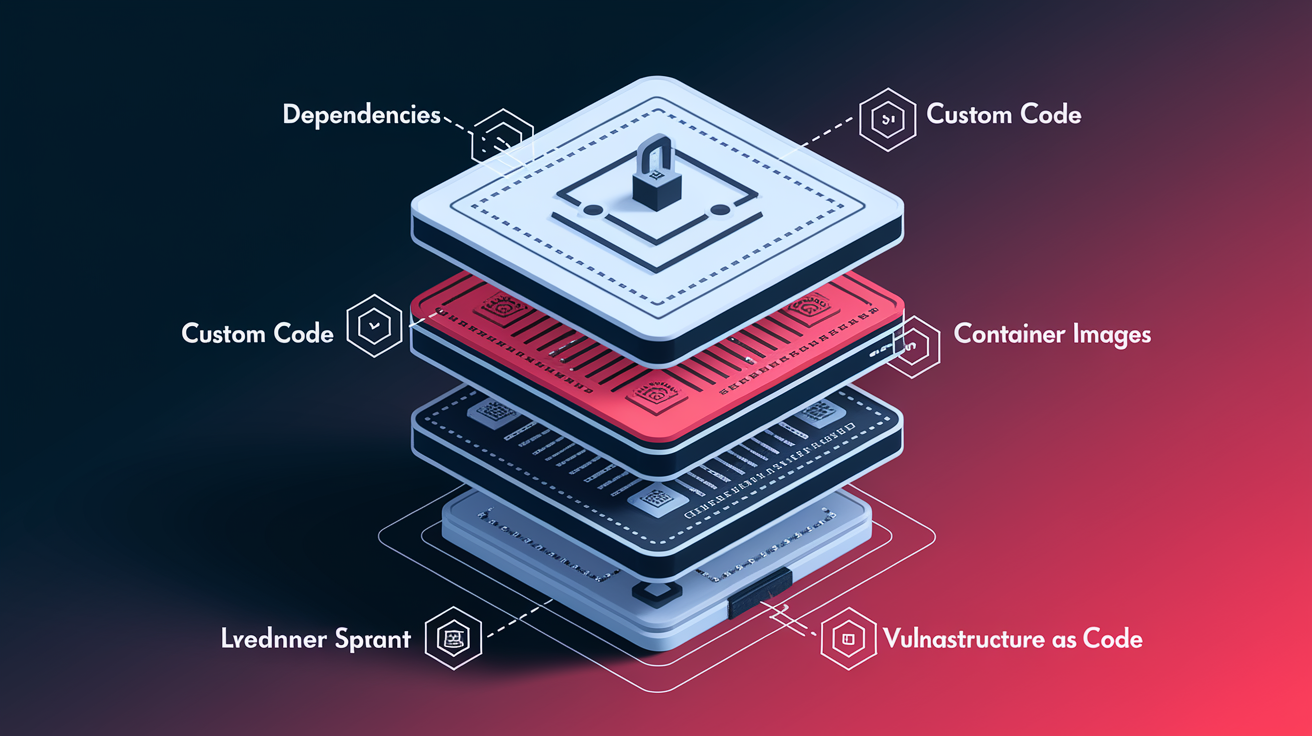
Snyk scans four layers: application dependencies, custom code (SAST via Snyk Code), container images (OS packages plus app dependencies), and infrastructure-as-code definitions like Terraform, CloudFormation, Kubernetes YAML, Helm. Each scan produces findings tagged with severity, exploit maturity, and fix availability. Dependabot scans only dependencies declared in manifest files: npm, Maven, pip, Bundler, Composer, NuGet, Cargo, and Docker image references. It doesn’t analyze custom code or infrastructure templates.
Security intelligence sources differ. Snyk maintains a proprietary vulnerability database it claims is roughly 3× larger than the next public source. Plus, it’s disclosed over 3,400 vulnerabilities discovered by its own research team. For JavaScript, Snyk reports 92% of its disclosed vulnerabilities reached developers before the NVD published them. Detection happens on average 47 days earlier than competing public feeds. Dependabot pulls from the GitHub Advisory Database, which contains 20,000+ reviewed advisories curated by GitHub security researchers. Both databases are solid, but Snyk’s lead-time advantage and proprietary research give it an edge for zero-day and fast-moving threats.
Remediation support is where the tools diverge most. Snyk generates fix pull requests that upgrade to the minimum safe version, includes changelog excerpts, and displays a compatibility score based on CI pass rates from thousands of public repos. When no safe version exists, Snyk can inject a proprietary patch: a code snippet that neutralizes the vulnerability without bumping the version. Rare, but valuable for pinned dependencies or hard-to-upgrade transitive chains. Dependabot creates security update PRs that bump to the minimum patched version and scheduled version-update PRs to keep all dependencies current, not just vulnerable ones. Dependabot’s version-update capability (keeping non-vulnerable dependencies fresh) is something Snyk doesn’t natively provide.
Platform coverage shapes integration choices. Snyk supports GitHub, GitLab, Bitbucket, and Azure DevOps via OAuth or token-based connections. Plus, a CLI (snyk test, snyk monitor) that runs in any CI pipeline and IDE plugins for VS Code, JetBrains, Eclipse, and Cursor. Dependabot is GitHub-only. It runs inside GitHub Actions or as a native service tied to each repository’s settings. If your code lives on GitLab or you need IDE-level feedback, Dependabot can’t help.
Pricing and Licensing Overview
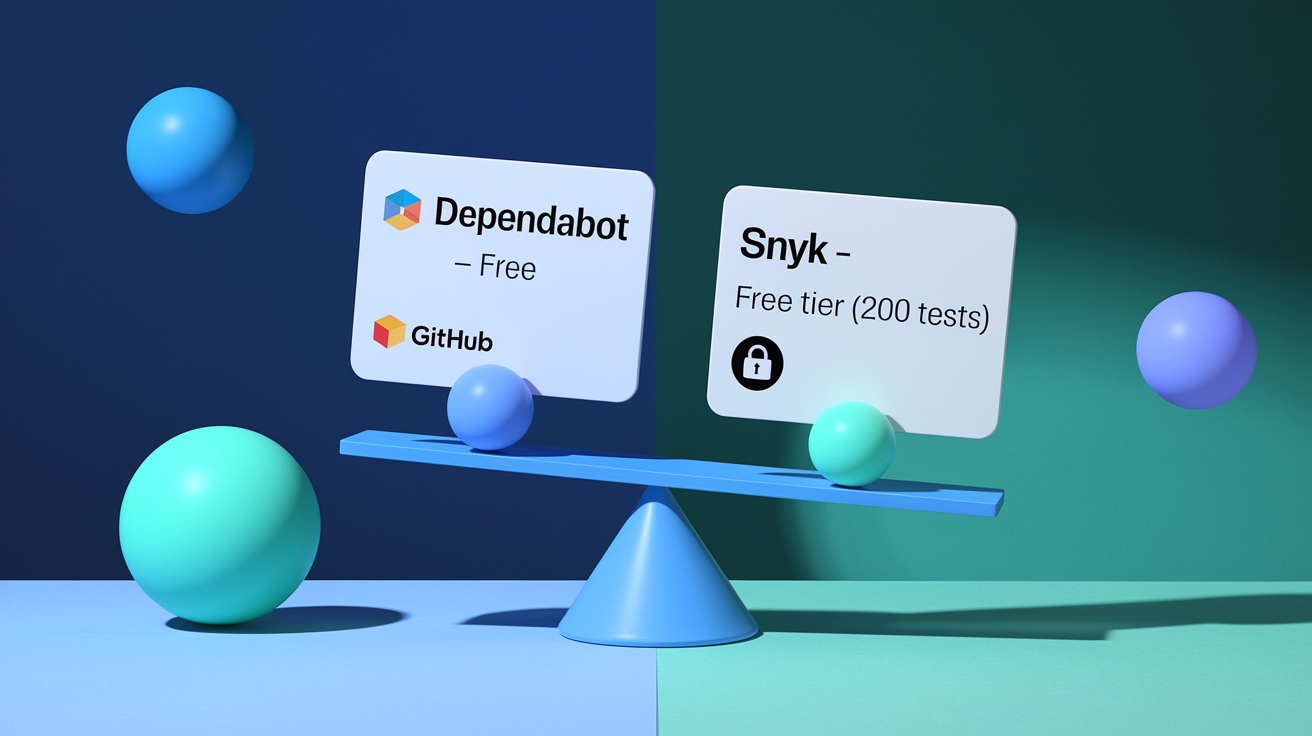
Dependabot is completely free for all GitHub repositories, public and private, with no usage limits. Security alerts and version update PRs run at zero cost. There are no paid tiers because Dependabot is a GitHub-native feature bundled into the platform.
Snyk offers a free tier capped at 200 open-source tests per month. Enough for small projects or individual developers. Beyond that limit, you need a paid Team or Enterprise plan. Pricing scales by developer seat and feature set. The free tier excludes license compliance checks, advanced reachability analysis, multi-project reporting, and priority support. Snyk doesn’t publish per-seat prices publicly. Expect negotiated contracts for Team and Enterprise plans.
Key pricing decision points:
If every repo is on GitHub and budget is tight, Dependabot delivers immediate value at zero cost.
If you need container scanning, IaC analysis, or license compliance, Snyk’s free tier lets you test 200 scans per month before committing to paid plans.
For teams beyond a handful of developers, Snyk’s Team plan becomes necessary to unlock meaningful scan volume and reporting.
Enterprise features (SSO, advanced audit logs, custom policies) require the Enterprise tier.
Ecosystem and Language Support
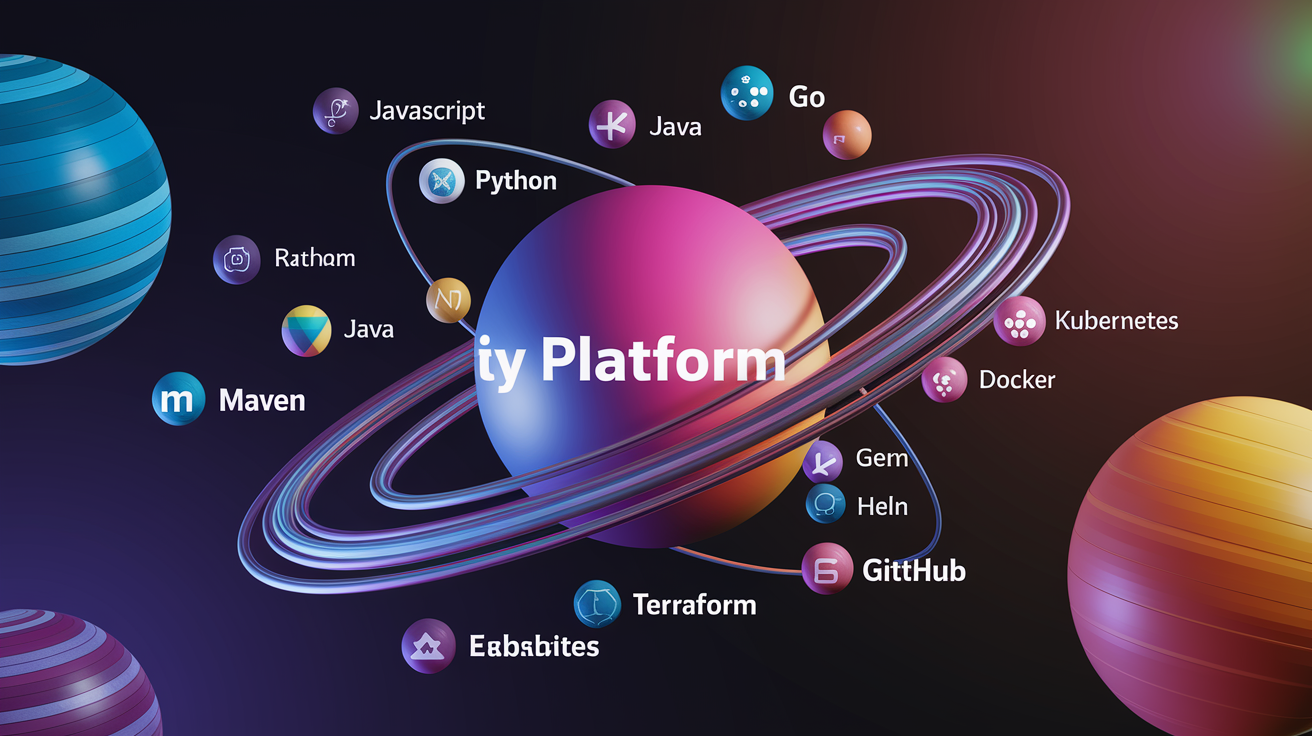
Snyk covers 13 languages and more than 20 package managers, including npm, Yarn, Maven, Gradle, pip, pipenv, Poetry, Bundler, Composer, NuGet, Go modules, Cargo, and PHP. It also scans Docker images (Alpine, Debian, Ubuntu, Red Hat base layers), Kubernetes manifests, Terraform modules, CloudFormation templates, and Helm charts. This breadth means Snyk can find issues in your application code, the OS packages in your containers, and the infrastructure definitions that deploy them.
Dependabot supports 25+ ecosystems: npm, pip, Maven, Gradle, Cargo, Docker (image tags), Terraform modules, GitHub Actions, Helm, Bun, uv, and more. The list is wider than Snyk’s in non-language ecosystems because Dependabot treats GitHub Actions, Terraform, and Docker as first-class package sources. Dependabot doesn’t scan the OS layer inside a Docker image. It only updates the image tag in your Dockerfile. For example, if you reference node:18-alpine, Dependabot will propose node:20-alpine when a new major version ships, but it won’t detect a CVE in the Alpine packages inside that image.
Ecosystem maintenance differs. Snyk prioritizes depth: reachability analysis for Java and JavaScript, license metadata, exploit intelligence. Dependabot prioritizes breadth and update automation across the GitHub ecosystem. If you run a polyglot stack with containers and infrastructure code, Snyk’s unified view across all layers reduces tool sprawl. If you want scheduled PRs for GitHub Actions and Terraform modules alongside your npm dependencies, Dependabot handles that natively.
CI/CD and Workflow Integration

Snyk integrates with GitHub, GitLab, Bitbucket, and Azure DevOps through repository connections that scan on every commit or pull request. It also offers a CLI that runs in Jenkins, CircleCI, Travis CI, GitHub Actions, GitLab CI, or any shell environment. Common workflow: run snyk test in CI to block merges if high-severity vulnerabilities appear, then run snyk monitor to push results to the Snyk dashboard for long-term tracking. The CLI supports JSON output, SARIF reports, and custom exit codes for pipeline gating.
Dependabot is deeply tied to GitHub. Enable it in repository settings or add a .github/dependabot.yml file, and it runs on a schedule you define: daily, weekly, or monthly. Security updates trigger immediately when a new advisory lands. Dependabot PRs appear in the same review queue as human-authored PRs and integrate with GitHub branch protection rules, required status checks, and CODEOWNERS. Automated merging is possible via GitHub Actions or third-party bots, but it requires extra configuration. Out of the box, you review and merge manually.
Snyk’s multi-platform reach makes it the default choice for teams with repos scattered across GitHub and GitLab, or for organizations that enforce CI-based security gates in Jenkins or Azure Pipelines. Dependabot’s zero-setup GitHub integration makes it ideal for teams that live entirely in GitHub and want dependency updates running in under 10 minutes.
Automated Fix and Pull Request Capabilities
Dependabot automatically opens pull requests for both security updates and scheduled version updates. Security PRs bump vulnerable dependencies to the minimum patched version the moment GitHub’s advisory database publishes a fix. Version-update PRs run on your schedule and propose upgrades for all dependencies, even those without known vulnerabilities. This keeps your project current and reduces the surface area for future issues. Dependabot groups related updates when configured, reducing PR noise. For example, bundling all minor @babel/* updates into one PR.
Snyk generates fix pull requests that upgrade to the minimum safe version and include a compatibility score derived from CI pass rates in thousands of public repositories. If version 2.3.1 of a library passed CI 94% of the time in similar projects, Snyk shows that percentage to help you gauge upgrade risk. When no safe upgrade exists (say, a transitive dependency three layers deep has a CVE but no patched release), Snyk can apply a proprietary patch. This patch is a minimal code change that fixes the vulnerability without altering the version number, allowing you to stay on a pinned release while eliminating the risk.
Snyk doesn’t natively offer the “keep everything current” version-update workflow that Dependabot provides. Snyk focuses on security and licenses. If you want regular bumps to the latest non-vulnerable versions, you either configure Snyk policies to be aggressive about all outdated dependencies or run Dependabot alongside Snyk. Many teams do exactly that: Dependabot for scheduled version updates, Snyk for deep vulnerability scanning and container/IaC coverage.
Reporting, Dashboards, and Governance

Snyk provides a centralized dashboard that aggregates vulnerabilities, license issues, and policy violations across all connected projects. Each finding displays a Risk Score (0 to 1000) calculated from 12+ factors: CVSS severity, exploit maturity (proof-of-concept available, actively exploited), reachability analysis (is the vulnerable function actually called?), fix availability, and social trends. Security teams can filter by project, language, or severity, export reports for compliance audits, and track remediation velocity over time. Enterprise plans add role-based access, custom policy enforcement, and SSO.
Dependabot surfaces findings in GitHub’s Security tab on a per-repository basis. Each alert links to the advisory, shows the affected version range, and points to the automated PR if one exists. Compatibility scores appear in PR descriptions when available, pulled from public CI data. Dependabot doesn’t offer a cross-repository executive dashboard or trend analysis. For organizations managing dozens or hundreds of repos, tracking Dependabot alerts at scale requires GitHub Advanced Security and custom scripting or third-party aggregation tools.
Governance and policy enforcement live in Snyk. You can define rules like “block PRs with critical vulnerabilities older than 30 days” or “fail builds if GPL-licensed dependencies appear.” Dependabot enforces policies indirectly through GitHub branch protection and required status checks, but it lacks native policy DSL or license-compliance workflows.
Pros and Cons of Each Tool
Snyk Pros:
Proprietary vulnerability database roughly 3× larger than public sources. Detects issues an average of 47 days earlier.
Reachability analysis for Java and JavaScript reduces false positives by showing whether vulnerable code paths are actually called.
Risk Score (12+ factors, 0 to 1000 scale) prioritizes findings by real-world exploitability, not just CVSS.
Multi-platform support (GitHub, GitLab, Bitbucket, Azure DevOps), CLI for any CI pipeline, and IDE plugins for real-time feedback.
Container and IaC scanning plus license compliance in a single tool.
Proprietary patches when no safe version exists.
Snyk Cons:
Free tier limited to 200 open-source tests per month. Team and Enterprise plans require paid contracts with non-public pricing.
More complex setup: OAuth connections, CLI configuration, policy tuning, compared to Dependabot’s one-click enable.
No native “version update” automation to keep all dependencies current. Focused on security and licenses, not general freshness.
Dependabot Pros:
Completely free for all GitHub repositories with no usage caps.
Zero setup. Enable in repo settings or add a YAML file, and PRs start appearing within hours.
Supports 25+ ecosystems including Docker image tags, Terraform modules, and GitHub Actions.
Scheduled version-update PRs keep all dependencies current, not just vulnerable ones, reducing future security debt.
Dependabot Cons:
GitHub-only. No support for GitLab, Bitbucket, or Azure DevOps.
Depends on GitHub Advisory Database. No proprietary research or early-detection advantage.
No reachability analysis, multi-factor risk scoring, or license compliance features.
Limited reporting and dashboards. Per-repo alerts don’t aggregate into an enterprise view without Advanced Security.
Recommendations Based on Use Cases

Choose Dependabot when all your code lives on GitHub, budget is constrained, and you want immediate dependency automation with zero operational overhead. Dependabot is the right default for startups, small teams, open-source projects, and any organization that values simplicity over depth. The combination of free security updates and scheduled version updates means you stay current on patches and reduce technical debt without dedicating engineer time to tooling setup. If you already pay for GitHub and don’t need container scanning or multi-platform support, Dependabot delivers 80% of the value at 0% of the cost.
Choose Snyk when you need earlier vulnerability detection, deeper intelligence, or coverage beyond application dependencies. Snyk is built for teams that run containers in production, manage infrastructure as code, enforce license policies, or operate across multiple SCM platforms. The proprietary database, 47-day detection lead, and reachability analysis justify the licensing cost when security is a compliance requirement or a competitive differentiator. Snyk also fits teams that want a single dashboard for all security findings (dependencies, containers, IaC, and SAST) rather than stitching together multiple tools.
A hybrid approach is common and often optimal. Run Dependabot for scheduled version updates and low-friction dependency PRs, then layer Snyk on top for deep vulnerability scanning, container and IaC coverage, and risk-based prioritization. This pattern gives you Dependabot’s automation and breadth plus Snyk’s intelligence and enterprise features. Many organizations enable Dependabot in all repos by default and selectively enable Snyk for critical applications, production services, or repositories that handle regulated data. The tools don’t conflict. Dependabot keeps dependencies fresh, Snyk catches what Dependabot misses and adds layers Dependabot doesn’t scan.
Final Words
in the action: this post lays out a clear, practical split between Snyk and Dependabot. We compared scope, detection depth, pricing, language support, CI/CD hooks, automated PRs, reporting, and use-case recommendations. Snyk brings deep scans across code, containers, and IaC; Dependabot shines at simple GitHub-native dependency updates.
Pick Snyk for multi-stack security and governance, Dependabot for low-friction automation. Either choice cuts risk and saves time—use this snyk vs dependabot comparison as a quick checklist and move forward with confidence.
FAQ
Q: Which is better: Snyk or Dependabot?
A: Which is better depends on your needs: Snyk is better for deep scanning, multi‑stack and enterprise use; Dependabot is better for GitHub‑native, simple automated dependency updates for small teams.
Q: What are the core feature differences between Snyk and Dependabot?
A: The core feature differences are that Snyk scans code, dependencies, containers and IaC with remediation guidance, while Dependabot focuses mainly on automated dependency updates inside GitHub.
Q: How do pricing and licensing differ between Snyk and Dependabot?
A: How pricing differs: Dependabot is free inside GitHub repos; Snyk uses free, Team, and Enterprise tiers and scales pricing by developer count and project usage, becoming costly at scale.
Q: Which tool supports more languages and ecosystems?
A: Which tool supports more languages: Snyk supports 15+ languages and many package managers; Dependabot supports the main ecosystems (npm, Maven, RubyGems, Composer, NuGet, pip) but has narrower breadth.
Q: How do Snyk and Dependabot fit into CI/CD pipelines and workflows?
A: How they fit into CI/CD: Snyk offers CLI, API, pipeline gates and integrates with GitHub, GitLab, Azure DevOps, Bitbucket and Jenkins; Dependabot integrates most strongly and natively with GitHub only.
Q: How do automated fix and pull request capabilities compare?
A: How they compare: Dependabot auto‑generates dependency update PRs reliably; Snyk also generates upgrade PRs plus patch suggestions and proprietary fixes, with more remediation context and control.
Q: How do reporting, dashboards, and governance differ between the two?
A: How reporting differs: Snyk provides dashboards, reports, audit controls and governance for enterprises; Dependabot gives PR‑level details but has limited centralized reporting and compliance features.
Q: What are the main pros and cons of Snyk and Dependabot?
A: The main pros and cons: Snyk pros—deep scans, broad coverage, strong remediation; cons—cost, complexity. Dependabot pros—simple, automated, free on GitHub; cons—limited scanning depth and reporting, GitHub‑centric.
Q: Which tool is best for enterprises versus small teams?
A: Which is best: Enterprises and multi‑stack teams should pick Snyk for depth, IaC and container scanning; small teams or GitHub‑native projects should pick Dependabot for simple, automated dependency upkeep.
Q: Can you run both Snyk and Dependabot together, and when does that make sense?
A: Whether to run both: Running both makes sense when you want Dependabot’s hands‑off dependency updates plus Snyk’s deeper scans, remediation, and governance—use both to cover automation and security depth.