


Do you know what’s really in your build?
SBOM generation tools automate an accurate inventory of libraries, frameworks, and transitive dependencies so you can catch vulnerabilities, handle licenses, and meet compliance during builds or CI/CD.
There are more than a dozen solid options: fast multi-language scanners, language-specific generators, and container-focused analyzers.
Each trades off speed, accuracy, and ecosystem coverage.
This post walks the top SBOM generators, shows when to use each, and gives a practical combo you can drop into your pipeline.
Best SBOM Generation Tools (Quick List)
SBOM tools automate component inventories for your software projects. They capture open-source libraries, frameworks, and dependencies so you can track vulnerabilities, manage licenses, and meet compliance requirements. The right tool generates accurate, machine-readable SBOMs during your build or CI/CD process.
You’ve got more than a dozen solid SBOM generators now. Some are lightweight CLI utilities. Others are enterprise platforms with enrichment and continuous monitoring. Some focus on specific languages or package managers, while others handle polyglot projects or container images. Most output SBOMs in CycloneDX or SPDX format, making them compatible with vulnerability scanners, risk platforms, and regulatory reporting workflows.
- Syft (Anchore) — Fast, multi-language CLI that scans container images, filesystems, and archives. Outputs SPDX, CycloneDX, or native JSON and integrates with Grype for vulnerability analysis.
- CycloneDX CLI — Lightweight SBOM generator supporting CycloneDX 1.4 and 1.6. Ecosystem-specific plugins for Maven, Gradle, Node.js, Python, and Go ensure high transitive dependency accuracy.
- SPDX Toolkit — Official SPDX tooling for generating ISO/IEC 5962:2021 compliant SBOMs in tag/value, JSON, or YAML. Broad plugin support across package managers.
- Tern — Container-focused generator that scans Docker, OCI, and Singularity images layer by layer. Outputs SPDX and integrates with NIST NVD and distribution vulnerability databases.
- Trivy — All-in-one scanner that detects vulnerabilities, secrets, and misconfigurations. Generates CycloneDX or SPDX SBOMs from container images, filesystems, and repositories.
- OSS Review Toolkit (ORT) — Large-scale dependency analyzer for polyglot repos. Generates SBOMs, evaluates licenses, and enforces policy checks across multiple languages and build tools.
- osv-scanner — Google’s open-source vulnerability scanner that can export SBOM data in JSON for integration with risk platforms and continuous monitoring workflows.
- Microsoft SBOM Tool (sbom-tool) — Cross-platform SPDX generator that produces document metadata, SHA-256 hashes, purl identifiers, and full dependency trees for Windows, Linux, and macOS projects.
When selecting a tool, prioritize ecosystem coverage (languages and package managers you use), accuracy of transitive dependency detection, and ease of integration into your existing build or CI pipeline. Open-source options like Syft and CycloneDX CLI work well for single-language or small-team projects. Larger organizations may need platform-level features such as SBOM validation, enrichment, redaction, and continuous vulnerability monitoring.
Detailed Comparison of Leading SBOM Tools
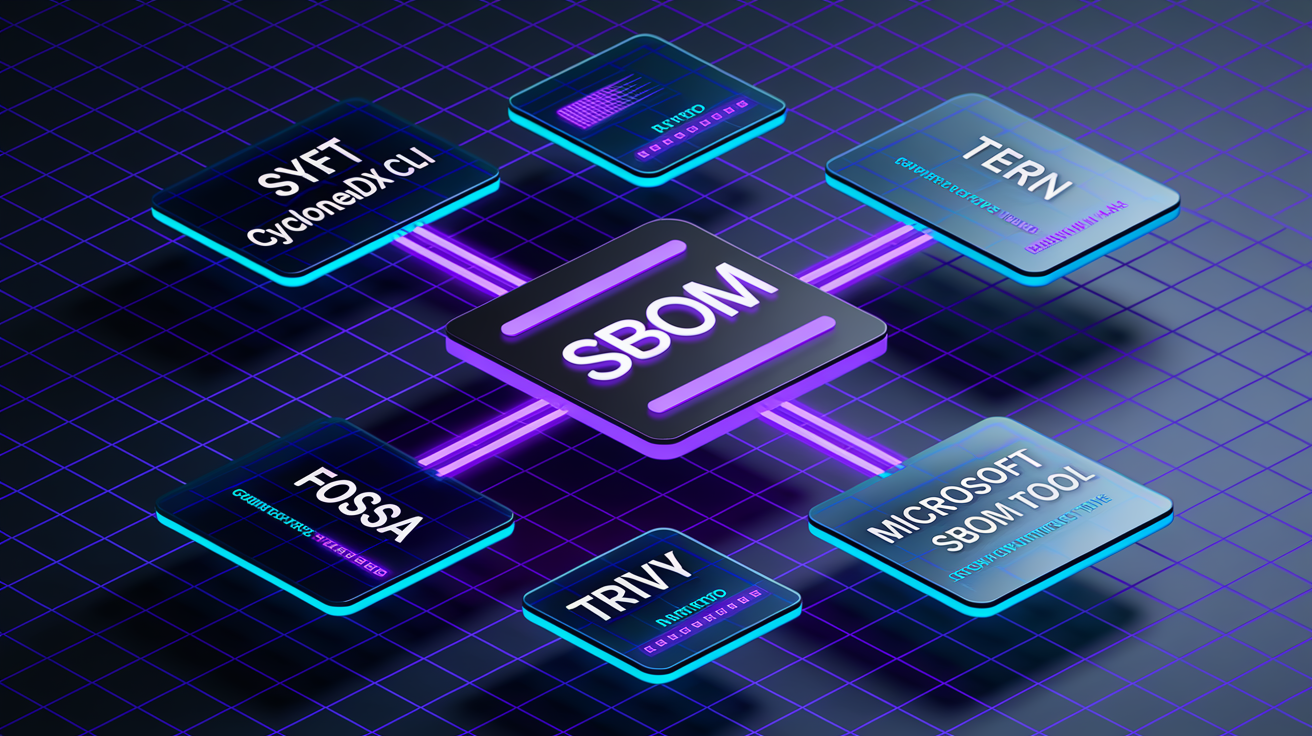
Each tool brings distinct strengths and trade-offs shaped by its primary use case, architecture, and community focus. Understanding where each excels, and where it falls short, helps you match capabilities to your workflow.
| Tool | Primary Strength | Weakness | Supported Formats |
|---|---|---|---|
| Syft | Fast container and filesystem scanning. Multi-ecosystem support including Go, Java, Python, JavaScript, PHP, Ruby | Can miss dependencies detected by language-specific tools. Produces spurious entries in flat scans (830+ observed in one test) | SPDX, CycloneDX, Syft JSON, XML, text |
| CycloneDX CLI | High transitive dependency accuracy for Java/Maven/Gradle. Machine and human-readable output. Strong ecosystem adoption | Requires separate plugin per language/build tool. Operational overhead in polyglot repos | CycloneDX 1.4, 1.6 (JSON, XML) |
| Tern | Layer-by-layer container analysis. Integrates with NVD, Alpine, Red Hat vulnerability data. Python API for custom DBs | Slower analysis. Less useful for non-containerized projects | SPDX |
| FOSSA | End-to-end license compliance and ticketed enterprise support. Integrates with GitHub/GitLab for policy enforcement | Default SPDX plain-text output is less machine-friendly. Observed license attribution errors in test (Apache-1.1 mismatch) | SPDX tag/value, JSON, CycloneDX (via conversion) |
| Trivy | All-in-one: SBOM generation plus vulnerability, secret, and misconfiguration scanning in one tool | Broader scope can increase scan time. Requires post-processing for vulnerability prioritization | SPDX, CycloneDX (JSON, table) |
| Microsoft SBOM Tool | Cross-platform (Linux, Windows, macOS). Produces full dependency trees with SHA-256 hashes and purl identifiers | SPDX-only output. Limited ecosystem coverage compared to Syft or ORT | SPDX 2.3 |
The comparison reveals a clear pattern. Language-specific tools (CycloneDX plugins, npm-sbom) deliver the highest accuracy for single-language projects, while multi-language tools (Syft, ORT, Trivy) trade some precision for breadth and speed.
Container-focused scanners (Tern, Trivy, Syft) excel at image analysis but may miss source-level dependencies if you only scan compiled artifacts. License compliance tools (FOSSA) prioritize legal metadata but can sacrifice machine readability and require manual validation of attribution.
For most teams, the best approach is to combine a fast, broad scanner like Syft for CI checks with a language-specific generator for release artifacts, then feed both outputs into an SBOM management platform for enrichment, validation, and continuous monitoring.
Supported SBOM Formats and Compatibility

The two dominant SBOM standards are CycloneDX (ECMA-424) and SPDX (ISO/IEC 5962:2021). They define how components, versions, licenses, and relationships are structured in machine-readable documents. CycloneDX 1.4 and 1.6 use lightweight XML or JSON schemas designed for fast parsing and interoperability with vulnerability databases and risk platforms. SPDX 2.3 and 3.0.1 offer tag/value, JSON, and YAML serialization, with a strong focus on copyright metadata, licensing fields, and provenance tracking required by regulators and enterprise governance teams.
Most modern SBOM tools generate both formats or provide conversion utilities. Syft outputs SPDX, CycloneDX, and its own native JSON, and includes a built-in converter to switch between formats without re-scanning. CycloneDX CLI tools produce JSON and XML SBOMs that map cleanly to Maven coordinates and package URLs (purl), making it easy to correlate components across scanners and registries. SPDX Toolkit and Microsoft SBOM Tool emit strict SPDX documents with SHA-256 and SHA-1 hashes, file-level metadata, and package relationship graphs that satisfy compliance frameworks and audit requirements.
One practical consideration: SPDX plain-text (tag/value) output, still the default in some tools like FOSSA, is human-readable but harder to parse programmatically and can introduce errors when converting to structured formats like JSON. If you rely on automated ingestion, vulnerability enrichment, or cross-SBOM search, prefer JSON or XML outputs and validate against the official CycloneDX or SPDX JSON schemas before importing. Tern focuses exclusively on SPDX, which works well for container workflows but limits interoperability with CycloneDX-native platforms unless you add a conversion step.
- CycloneDX JSON/XML — Lightweight, fast to parse, widely supported by risk platforms and vulnerability scanners. Ideal for CI/CD automation and real-time enrichment workflows.
- SPDX JSON — Machine-readable with rich license and copyright metadata. Strong support across open-source ecosystems and regulatory tools. Easier to validate and enrich than tag/value.
- SPDX tag/value — Human-readable text format. Useful for audits and manual reviews but requires parsers and manual validation before automated processing.
- SPDX YAML — Clean syntax for version control and diff-friendly storage. Less common in tooling but supported by SPDX 3.0.1 spec.
- Tool-native formats — Syft JSON and similar proprietary schemas offer richer metadata and faster internal processing but require conversion for cross-tool interoperability.
Integration Options for CI/CD and Cloud Environments

Generating SBOMs once during development isn’t enough. Continuous SBOM generation and enrichment at every build, image push, and deployment keeps your inventory current as dependencies change. Most SBOM tools now offer first-class integrations for GitHub Actions, GitLab CI, Jenkins, Azure DevOps, and CircleCI, letting you automate generation as a standard pipeline step and fail builds when critical vulnerabilities or license violations are detected.
Syft integrates into CI/CD with minimal friction. A single docker run command or a GitHub Action step scans your artifact and drops an SBOM into the build output. CycloneDX plugins hook directly into Maven (mvn org.cyclonedx:cyclonedx-maven-plugin:makeBom) or Gradle (./gradlew cyclonedxBom) so SBOMs are generated automatically during mvn clean install or gradle build, with JSON and XML outputs landing in the target or build folder. Trivy can run as a pre-commit hook, a container registry webhook, or a Kubernetes admission controller, blocking image deployments that fail policy checks or lack valid SBOMs.
- GitHub Actions — Use Anchore’s syft-action or the official CycloneDX GitHub Action to generate and upload SBOMs as build artifacts. Pair with dependency review workflows to block PRs with new vulnerabilities.
- GitLab CI — Add a Syft or Trivy scan job to .gitlab-ci.yml. Export SBOMs to artifact storage or push to a registry for continuous monitoring and vulnerability correlation.
- Jenkins — Install the Anchore plugin or run Syft/Trivy as shell steps. Archive SBOM JSON/XML as build artifacts and trigger downstream enrichment or reporting jobs.
- Azure DevOps — Use the Syft task from the Marketplace or script CycloneDX Maven/Gradle plugins. Publish SBOMs to Azure Artifacts for compliance tracking and audit trails.
- Kubernetes admission controllers — Deploy Trivy Operator or Anchore Enterprise to scan images on admission. Generate and store SBOMs in cluster metadata. Enforce pod security policies based on SBOM contents.
- OCI registries — Push SBOMs as OCI artifacts alongside container images using tools like Syft or Trivy. Attach signatures and attestations for supply-chain integrity and verification workflows.
Pricing and Licensing Models for SBOM Tools

Most SBOM generation tools are open-source and free to use, released under Apache-2.0, MIT, BSD-2-Clause, or MPL-2.0 licenses that allow commercial use without fees. Syft (Apache-2.0), CycloneDX CLI (Apache-2.0), Microsoft SBOM Tool (MIT), Tern (BSD-2-Clause), and Retire.js (Apache-2.0) all run locally or in CI without subscription costs.
Commercial and enterprise tiers add features like SBOM validation, enrichment with live vulnerability feeds, continuous monitoring, policy enforcement, ticketed support, and SaaS dashboards for organization-wide SBOM inventory. FOSSA offers a free CLI (MPL-2.0) with basic license scanning, but full license compliance workflows, GitHub/GitLab integrations, and enterprise reporting require a paid plan. Anchore Enterprise extends Syft with centralized SBOM management, policy-based admission control for Kubernetes, and integration with SIEM and GRC platforms. JFrog Xray includes SBOM generation and enrichment as part of its artifact lifecycle management suite, typically bundled into enterprise subscriptions alongside Artifactory and security scanning.
| Tool | Cost Model | Notes |
|---|---|---|
| Syft | Free (Apache-2.0) | No licensing costs. Pair with open-source Grype for vulnerability scanning |
| CycloneDX CLI | Free (Apache-2.0) | Community-supported. Commercial support available from ecosystem vendors |
| Anchore Enterprise | Commercial subscription | Centralized SBOM management, policy engine, Kubernetes admission control. Pricing on request |
| FOSSA | Free CLI (MPL-2.0). Paid SaaS | License compliance, GitHub/GitLab integration, and enterprise reporting require subscription |
| Tern | Free (BSD-2-Clause) | Open-source. Community support. Integrates with free NIST NVD feeds |
How to Choose the Right SBOM Generation Tool for Your Workflow

Picking the right SBOM generator comes down to matching tool capabilities to your project’s language stack, deployment model, compliance requirements, and CI/CD maturity. A Java-only shop building Maven artifacts will get the highest accuracy from CycloneDX’s Maven plugin, while a polyglot team deploying containerized microservices should prioritize Syft or Trivy for broad ecosystem support and image scanning.
Ecosystem and language coverage — If you use a single language (Node.js, Python, Go), prefer first-party or ecosystem-specific tools like npm-sbom or CycloneDX plugins. They detect transitive dependencies more reliably than multi-language scanners. For polyglot projects, start with Syft or ORT and validate output against a dependencies reference (for example, deps.dev or your package lock files).
Source vs binary vs container scanning — Decide whether you need SBOMs from source (pre-build), compiled artifacts (JARs, wheels), or container images. Syft and Trivy handle all three. Tern excels at container layers but is slower. CycloneDX plugins require build integration for source scans but produce cleaner dependency graphs.
Required SBOM formats — If your customers or regulators demand SPDX, use Microsoft SBOM Tool, SPDX Toolkit, or tools that output SPDX JSON. For internal workflows and vulnerability platforms, CycloneDX JSON is faster to parse and easier to enrich. Syft supports both and includes a format converter.
CI/CD integration and automation — Evaluate how easily the tool fits into your pipeline. Syft and Trivy offer GitHub Actions, GitLab CI templates, and Docker images for one-line integration. CycloneDX plugins hook into Maven/Gradle builds but require explicit configuration in pom.xml or build.gradle. Choose the path that minimizes build script changes and supports automated artifact upload.
Accuracy and validation needs — Run pilot scans on representative projects (Java app, Node.js service, Python package, container image) and compare detected components against your lock files or deps.dev output. Check for false positives (spurious entries, as seen in Syft’s flat scans) and false negatives (missing transitive dependencies). Validate SBOM output against official schemas before ingestion.
License compliance and legal risk — If license tracking is a priority, use tools like FOSSA or ORT that extract and validate license metadata. Be aware of potential license attribution errors (as observed in FOSSA’s SPDX output) and manually verify high-risk licenses (Apache-1.1, GPL variants) before accepting SBOM data as authoritative.
Ongoing maintenance and enrichment — Consider whether you need static SBOMs or continuous monitoring. Open-source tools generate point-in-time inventories. Enterprise platforms (Anchore Enterprise, JFrog Xray, or SBOM management SaaS) add validation, vulnerability enrichment, policy enforcement, and alerting when new CVEs affect your components. For regulated environments, continuous monitoring and VEX generation (automatically produced by some platforms) reduce response time and audit burden.
Accept that SBOMs may be imperfect. All tools miss edge cases or produce noise. But an imperfect SBOM generated during every build is far better than no SBOM at all. Run multiple tools if you have the pipeline capacity, merge their outputs, and feed the combined inventory into a validation and enrichment layer for the most complete view of your software supply chain.
Final Words
Kicked off with a scannable list of top SBOM generators and quick tool notes, then jumped into a feature-by-feature comparison of accuracy, format support, and ecosystem fit.
We broke down CycloneDX vs SPDX support, CI/CD and Kubernetes integration patterns, pricing models, and a practical seven‑point checklist for choosing a tool.
Pick sbom generation tools that match your package managers, CI pipeline, and compliance requirements, integrate them into your build, and you’ll reduce supply‑chain risk and save time. You’ve got this.
FAQ
Q: What is the tool for generating SBOM and what are SBOM tools?
A: The tool for generating an SBOM and SBOM tools are scanners that analyze source, packages, or container images to produce a bill of materials listing components, versions, licenses, and metadata for security and compliance.
Q: How is SBOM generated?
A: SBOMs are generated by running an SBOM scanner or build-time tool against code, packages, or images; the tool inventories components, records versions and hashes, then exports the SBOM in a chosen format.
Q: What should an SBOM contain?
A: An SBOM should contain component names, versions, package types, hashes, license info, supplier or vendor, dependency relationships, creation timestamp, and the tool or process that generated the SBOM.